


Medical Packaging Innovations: Achieving 800Å+ Aluminum Layers for Maximum Protection
In the pharmaceutical industry, the integrity of packaging is not just a matter of quality control—it is a matter of patient safety. As modern medicine moves toward more complex biologicals and highly sensitive Active Pharmaceutical Ingredients (APIs), the demand for “Total Barrier” protection has never been greater.
One of the most significant breakthroughs in 2026 is the ability to consistently achieve aluminum layers exceeding 800 Å (Angstroms) through advanced vacuum metallizing. This ultra-thick coating is redefining the standards for pharmaceutical shelf life and efficacy.
Why 800Å? The Necessity of Ultra-Thick Coating
Standard metallized films used in the food industry typically feature aluminum layers between 300 Å and 500 Å. While sufficient for snacks, these layers are often inadequate for the rigorous demands of the medical field.
1. Protecting Light-Sensitive Compounds
Many life-saving drugs, including certain antibiotics and vaccines, are highly photosensitive. Exposure to specific wavelengths of light can trigger chemical degradation. An 800Å+ aluminum layer provides near-total opacity, creating a “darkroom” environment that preserves the molecular stability of the medication.
2. Critical Moisture and Oxygen Barriers
For powdered medications and effervescent tablets, even a trace amount of moisture can lead to clumping or reduced potency. By increasing the aluminum thickness to 800Å+, the Moisture Vapor Transmission Rate (WVTR) and Oxygen Transmission Rate (OTR) are reduced to levels that rival expensive cold-form foil (Alu-Alu) packaging, but with greater flexibility and lower material costs.
3. Preventing Gas Migration
Modern biologics are often sensitive to atmospheric gases. A thicker, denser metallic lattice formed at 800Å+ acts as a superior physical shield, ensuring that the internal atmosphere of the blister pack or pouch remains sterile and unchanged from the point of manufacture to the point of use.
The Technical Challenge: Precision at Thickness
Achieving a 800Å+ layer is not simply a matter of “running the machine longer.” It requires sophisticated thermal management to prevent the plastic substrate (usually PET or PP) from melting or warping under the intense heat of prolonged evaporation.
This is where Induction Heating Technology becomes indispensable. Unlike traditional resistance heating, induction heating allows for:
- Faster Evaporation Rates: Depositing more metal in less time, reducing the thermal load on the film.
- Superior Adhesion: Ensuring the thick aluminum layer sticks firmly to the substrate without cracking or peeling during subsequent conversion processes.
- Pinhole-Free Surfaces: The stable graphite crucible evaporation source used in our machines ensures a continuous, dense metallic film that is essential for medical-grade standards.
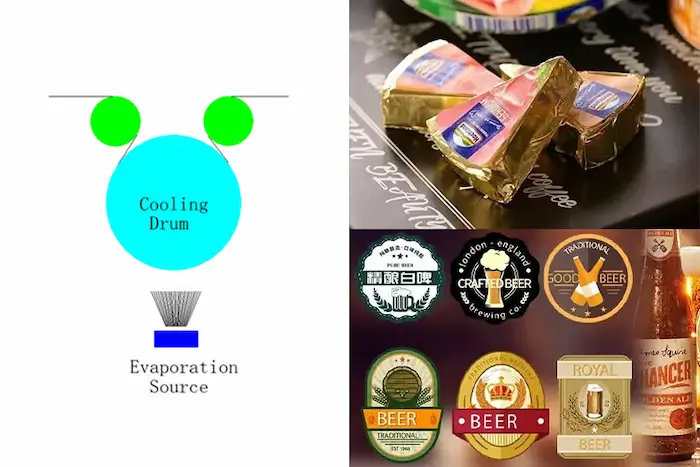
Aluminum Paper Vacuum Metallized Machine in factory production line
Cost-Efficiency: The Alternative to Cold-Form Foil
For years, the gold standard for high-sensitivity drugs was “Alu-Alu” (Cold-Form Foil). However, Alu-Alu is expensive and limits the visibility of the product.
By utilizing High-Barrier VMPET (800Å+), pharmaceutical companies can achieve:
- Material Savings: High-thickness metallized films are more cost-effective than pure aluminum foils.
- Increased Production Speed: Metallized films are easier to process on high-speed blister packaging lines.
- Reduced Carbon Footprint: Thinner, lighter packaging reduces shipping weight and energy consumption during production.

Compliance and Future-Proofing
As global regulatory bodies (such as the FDA and EMA) tighten requirements for drug stability testing, having a superior packaging barrier is a strategic advantage. Choosing equipment capable of delivering ultra-thick 800Å+ coatings ensures that your packaging exceeds current standards and is ready for the next generation of sensitive pharmaceuticals.
Conclusion
The shift toward 800Å+ aluminum layers represents the future of medical packaging. It combines the extreme protection of metal with the versatility of polymer films, providing a safe, efficient, and cost-effective solution for the world’s most sensitive medicines.
At Vacuum Metallizer Solutions, our Induction Heating Vacuum Metallized Machines are specifically engineered to reach these high-spec benchmarks. We help medical suppliers bridge the gap between technical necessity and operational efficiency.
Protect your pharmaceutical innovations. Explore our Medical-Grade Metallizing Solutions or Contact our experts for a technical consultation.