


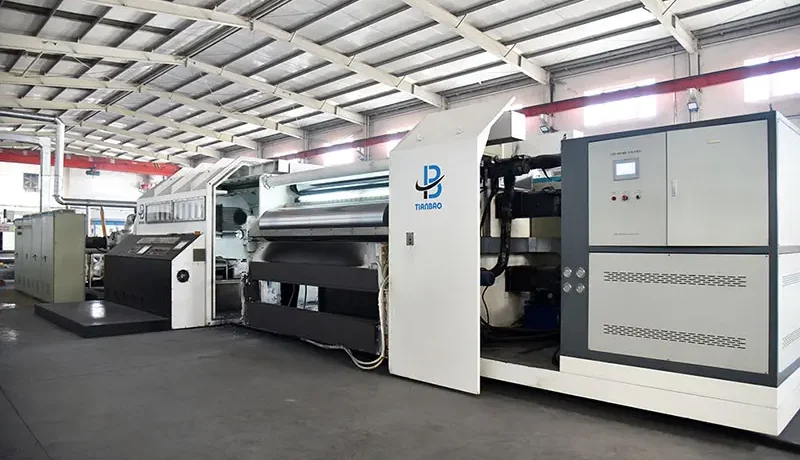
The Anatomy of a Fully Automatic Suspension Vacuum Coating Machine
In the industrial thin-film industry, the Fully Automatic Suspension Vacuum Coating Machine is considered the high-speed workhorse of production. But for many buyers, the terminology—”suspension,” “rectangular,” “round”—can be confusing.
What makes a suspension machine different from a standard coater? And why does the shape of the chamber matter? In this anatomy lesson, we break down the core components and design philosophies that power these advanced systems.
1. The “Suspension” Advantage: What Does It Mean?
The term “suspension” refers to the configuration of the internal winding system. In a suspension-type machine, the entire unwinding and rewinding mechanism is integrated into a frame that is “suspended” or cantilevered, often attached to the chamber door or a specialized internal rack.
Key Benefits of Suspension Design:
- Rapid Loading & Unloading: Because the winding system is easily accessible, operators can change heavy rolls of PET or BOPP film much faster than in traditional “nested” designs.
- Superior Thermal Management: By suspending the film path, there is more open space for heat to dissipate, preventing the substrate from overheating during high-speed runs.
- Tension Stability: The suspension frame is precision-engineered to minimize vibration, which is critical for maintaining a constant gap between the film and the evaporation source.

Suspension vacuum coating machine
2. Chamber Design: Rectangular vs. Round
When browsing vacuum coating machines, you will notice two primary shapes. Each serves a specific operational purpose:
The Round Vacuum Chamber
The cylinder is the natural shape for vacuum vessels because it distributes external atmospheric pressure evenly.
- Pros: Extremely structurally sound, ideal for reaching ultra-high vacuum levels quickly, and generally features a smaller footprint.
- Best For: Standard applications where floor space is limited and high-vacuum integrity is the top priority.
The Rectangular Vacuum Chamber
While more complex to engineer, the rectangular design is becoming the standard for high-capacity industrial coaters.
- Pros: It provides a much larger internal volume, allowing for more complex winding paths and larger cooling drums. It also offers “walk-in” access for easier cleaning of the evaporation boats and shields.
- Best For: High-speed production lines (over 600m/min) and machines requiring multiple evaporation sources or specialized plasma treatment modules.
3. The Evaporation Source: The Core of the Machine
Located at the bottom of the chamber, the evaporation source is where the magic happens.
- For Standard Films: Resistance-heated ceramic boats are used to melt aluminum wire.
- For High-Barrier Films: Induction heating graphite crucibles are often integrated into the suspension frame to provide a more stable vapor cloud and lower pinhole rates.
4. The Winding System: Precision in Motion
A fully automatic machine lives and dies by its winding logic. The anatomy of a top-tier system includes:
- The Cooling Drum (Chill Roll): A massive, water-cooled cylinder that the film wraps around during metallizing to prevent thermal damage.
- Spreaders & Idler Rolls: Precision-aligned rollers that ensure the film remains flat, wrinkle-free, and perfectly centered (web guiding).
- Tension Sensors: Real-time feedback loops that adjust motor speed as the roll diameter changes.
5. The Pumping Stack: Maintaining the Void
The “anatomy” isn’t complete without the external organs—the pumps. A suspension machine typically utilizes a three-stage pumping system:
1. Rotary/Slide Valve Pumps: For initial “roughing.”
2. Roots Pumps: To quickly bridge the gap between atmospheric pressure and high vacuum.
3. Diffusion or Cryogenic Pumps: To maintain the deep vacuum (10-4 to 10-5 mbar) required for high-purityaluminum deposition.
Conclusion: Why Choose a Fully Automatic Suspension System?
Integrating all these anatomical features into a “Fully Automatic” system means that the entire process—from pumping down to winding tension and evaporation rate—is managed by a centralized PLC system. This reduces human error, increases yield, and ensures that every roll of film meets the same high standard.
At Vacuum Metallizer Solutions, we specialize in both rectangular and round suspension machines, tailored to your specific substrate and production volume.
Optimize your factory layout today. Explore our Suspension Coating Machine Specs or Contact us for a Custom Configuration.