


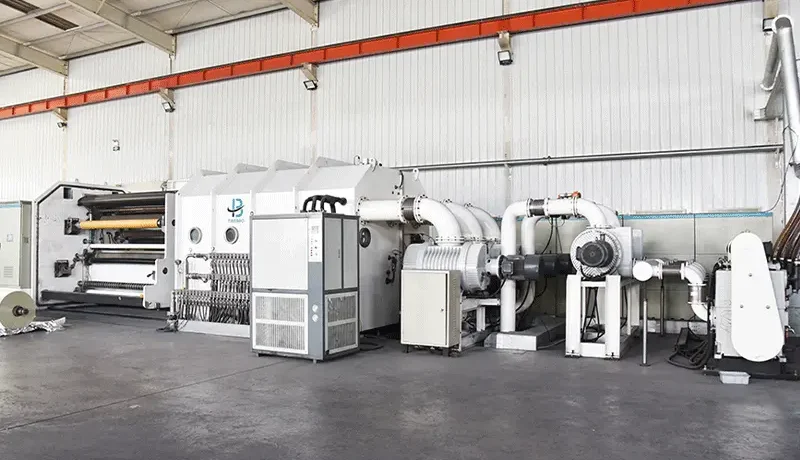
Vacuum Coating Machine: Technology, Types, and Industrial Applications
In modern manufacturing, the Vacuum Coating Machine plays a critical role in enhancing product durability, functionality, and appearance. From consumer electronics and automotive components to optical lenses and decorative hardware, vacuum coating technology has become an essential part of advanced industrial production.
This article provides a comprehensive overview of vacuum coating machines, including their working principles, main types, advantages, and applications.
What Is a Vacuum Coating Machine?
A vacuum coating machine is industrial equipment designed to deposit thin films of metal or compound materials onto a substrate surface in a high-vacuum environment. The vacuum condition eliminates air, moisture, and contaminants, ensuring superior coating quality and consistency.
The most common coating technologies include:
-
Physical Vapor Deposition (PVD)
-
Chemical Vapor Deposition (CVD)
-
Magnetron Sputtering
-
Vacuum Evaporation
These technologies enable manufacturers to create thin films that improve hardness, corrosion resistance, electrical conductivity, and decorative appearance.
Main Types of Vacuum Coating Machines
1. PVD Vacuum Coating Machine
Physical Vapor Deposition (PVD) involves vaporizing solid materials into atoms or molecules and depositing them onto the substrate surface.
Advantages:
-
Environmentally friendly process
-
High hardness coatings
-
Strong adhesion
-
Suitable for metals, ceramics, glass, and plastics
PVD coating machines are widely used for cutting tools, stainless steel decorative parts, mobile phone casings, and hardware accessories.
2. CVD Vacuum Coating Machine
Chemical Vapor Deposition (CVD) uses chemical reactions in a vacuum environment to form thin films on the substrate.
Key Features:
-
Excellent coating uniformity
-
Suitable for complex-shaped components
-
Ideal for semiconductor and precision industries
CVD is commonly used in microelectronics, aerospace components, and high-performance materials manufacturing.
3. Magnetron Sputtering Coating Machine
Magnetron sputtering is an advanced PVD technology that uses plasma to eject atoms from a target material and deposit them onto a substrate.
Advantages:
-
Dense and uniform films
-
Fast deposition rate
-
Suitable for large-area coating
It is widely applied in display panels, solar cells, optical glass, and architectural glass industries.
Core Components of a Vacuum Coating Machine
A standard vacuum coating system typically includes:
-
Vacuum Chamber
-
Vacuum Pump System
-
Power Supply System
-
PLC or Automated Control System
-
Heating and Cooling Systems
Among these components, the vacuum pumping system is particularly critical, as it directly affects film quality and process stability.
Industrial Applications
Vacuum coating technology is used across various industries:
-
Electronics Industry – Circuit boards, chips, connectors
-
Optical Industry – Lenses, camera modules, filters
-
Automotive Industry – Headlamp reflectors, decorative trims
-
Decorative Hardware – Bathroom fittings, stainless steel panels
-
Medical Devices – Surgical instruments and wear-resistant coatings
With the rapid growth of renewable energy, electric vehicles, and semiconductor manufacturing, demand for advanced vacuum coating machines continues to increase.
Advantages of Vacuum Coating Technology
-
Improved wear resistance
-
Enhanced corrosion resistance
-
Extended product lifespan
-
Superior aesthetic finishes
-
Energy-efficient and environmentally friendly
-
Capability for functional and multi-color coatings
Future Development Trends
As Industry 4.0 advances, vacuum coating machines are evolving toward:
-
Fully automated intelligent control systems
-
Energy-saving and eco-friendly designs
-
Large-scale and high-efficiency production
-
Multi-functional composite coating technologies
In particular, high-precision coating solutions for semiconductor and new energy industries are becoming key drivers of technological innovation.
Conclusion
Vacuum coating machines are essential to modern high-tech manufacturing. By improving surface performance and product value, they help companies enhance competitiveness and production efficiency.