


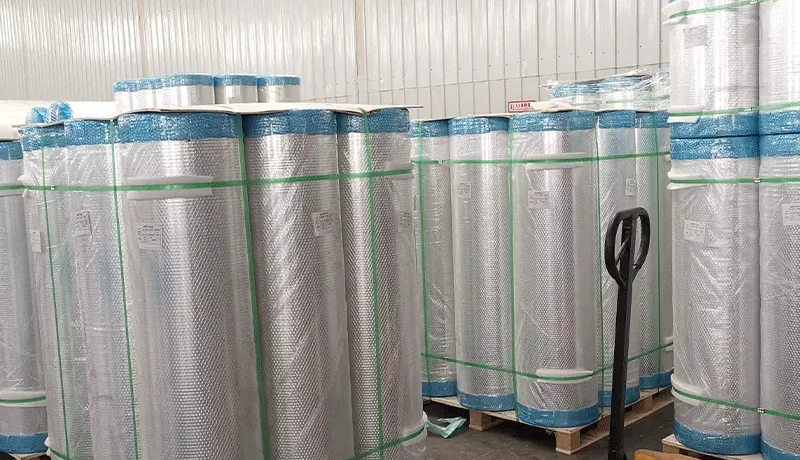
Aluminum Paper Metallizing: Why Specialized Machines Outperform General-Purpose Coaters
Aluminum paper metallizing is not just another coating process. It sits at the intersection of high-end packaging aesthetics and industrial production efficiency — powering everything from premium cigarette cartons and wine labels to luxury gift boxes and high-end cosmetic packaging. The metallized paper market continues to grow, driven by demand for visually striking, recyclable, and cost-effective packaging alternatives to traditional foil lamination.
Yet, many manufacturers still rely on general-purpose vacuum metallizers originally designed for plastic films like BOPP, PET, or CPP. While these machines can deposit aluminum onto paper, they are rarely optimized for it. The result? Slower throughput, higher defect rates, excessive downtime, and inflated energy bills.
This article examines why a specialized aluminum paper vacuum metallizer consistently outperforms its general-purpose counterparts — and why the difference matters to your bottom line.
Related Reading: Energy-Saving Vacuum Coating: How Modern Machine Design Lowers Operational Costs
1. The Unique Demands of Aluminum Paper Metallizing
Metallizing paper presents challenges that do not exist — or are far less pronounced — when coating polymer films.
Higher outgassing rates. Paper is a porous, hygroscopic material. When it enters a vacuum chamber, it releases moisture and trapped gases (outgassing) far more aggressively than plastic films. A general-purpose machine’s vacuum system — sized for low-outgassing substrates — struggles to maintain stable vacuum levels. The chamber pressure fluctuates, and coating uniformity suffers.
Surface roughness. Paper has a naturally rough and fibrous surface compared to the smooth, uniform surface of BOPP or PET. Achieving a bright, mirror-like metallic finish requires tighter process control. The evaporation source must deliver a consistent vapor plume across the entire web width, and the substrate must be held at a precise distance and angle from the source.
Higher thermal sensitivity. Paper scorches, discolors, or warps at temperatures that plastic films tolerate easily. The evaporation source design must manage radiant heat carefully — a general-purpose machine configured for heat-resistant films may inadvertently damage paper substrates.
Thicker coating requirements. Cigarette packaging and wine labels demand a premium metallic luster that often requires a heavier aluminum deposit than standard flexible packaging. Specialized machines are engineered to deliver this thickness consistently at production speed.
These demands explain why paper metallizing deserves a purpose-built solution.
Related Product: Aluminum Paper Vacuum Metallized Machine
2. Specialized Evaporation Source Design: Top Clamp and Staggered Arrangement
The evaporation source is the heart of any vacuum metallizer. It is where solid aluminum wire is continuously fed onto resistively heated ceramic boats, melted, vaporized, and directed toward the substrate. The design of this source array determines nearly every key performance metric: deposition rate, coating uniformity, material utilization, and maintenance downtime.
Top Clamp: Precision Over Pressure
In a typical general-purpose metallizer, evaporation boats are clamped from the side or bottom. This works adequately for coating films at moderate speeds. However, aluminum paper metallizing demands higher evaporation rates to achieve the heavy coating thickness that premium packaging requires. Higher rates mean higher boat temperatures, which cause thermal expansion and mechanical stress at the clamping points.
A top-clamp design — a hallmark of Tempo’s specialized aluminum paper metallizers — addresses this directly:
- Stable electrical contact. The top clamp applies uniform downward pressure across the entire boat length. As the boat expands thermally, the clamp maintains consistent contact resistance, preventing hot spots that lead to premature boat failure or uneven aluminum feed.
- Reduced boat warping. Side clamps create asymmetric force that can twist boats at high temperature. Top clamping distributes force evenly, dramatically extending boat service life.
- Better aluminum wetting. With stable clamping, the aluminum wire feeds consistently into the boat cavity and wets the ceramic surface uniformly. This translates to a stable evaporation rate and, consequently, uniform coating thickness across the web.
As noted by industry experts at Kennametal, the thermal resistance and mechanical stability of evaporator boat materials are critical to withstanding the extreme temperatures of the evaporation process. A well-designed clamping system protects this investment.
Staggered Arrangement: Full-Width Coverage Without Gaps
General-purpose coaters typically arrange evaporation boats in a single straight line. For narrow webs and light coatings, this suffices. But for aluminum paper — where web widths are often 1,600 mm to 2,500 mm and coating thickness targets are high — a single-row layout creates coverage gaps.
A staggered (zigzag) boat arrangement solves this:
- Overlapping vapor plumes. By offsetting adjacent boats, the vapor plumes overlap at the substrate plane. Every point on the paper surface receives metal from at least two boats, naturally averaging out any individual boat variation.
- Higher effective deposition rate. The staggered layout allows more boats per unit of web width without interference between adjacent vapor sources.
- Cross-web uniformity below ±5%. Tempo’s staggered source design routinely achieves coating thickness variation under ±5% across the full web width — a level of consistency essential for premium cigarette and wine label brands.
Together, the top-clamp mechanism and staggered arrangement form a synergistic system: stable, long-lasting boats producing a dense, uniform vapor field that delivers the heavy, brilliant aluminum finish customers demand.
3. Faster and Easier Cleaning = More Uptime
In aluminum paper metallizing, cleanliness is not optional — it is a throughput multiplier.
During operation, aluminum vapor deposits not only on the substrate but also on every internal surface of the vacuum chamber: shields, walls, viewports, and drive components. Over time, this accumulated aluminum builds up, flakes off, and becomes a contamination source that causes pinholes, coating defects, and even electrical shorts. Regular cleaning is unavoidable.
The difference between a specialized machine and a general-purpose one often comes down to how fast and how thoroughly you can clean it.
Specialized aluminum paper metallizers are designed for rapid cleaning:
- Modular shield design. Removable, lightweight shield panels line the interior of the deposition zone. Rather than scraping aluminum from fixed chamber walls — a labor-intensive process that can damage vacuum surfaces — operators simply unbolt and replace shields. The dirty shields are cleaned offline while the machine runs the next batch.
- Open-access chamber layout. The evaporation source area is positioned for easy operator access. There is no need to crawl into confined spaces or remove major components. A two-person crew can complete a full chamber cleaning in a fraction of the time required by a cramped general-purpose coater.
- Smooth internal surfaces. Specialized machines minimize crevices, sharp corners, and hard-to-reach areas where aluminum accumulates. Internal surfaces are designed to be accessible and cleanable with standard tools.
What does faster cleaning mean in practice?
Consider a typical production schedule running two shifts per day. A general-purpose machine might require 4–6 hours for a thorough chamber clean between campaigns, effectively losing half a shift. A specialized Tempo machine reduces that to 1.5–2 hours. Over 250 production days per year, that difference adds up to hundreds of extra productive hours — translating directly to higher output and faster return on investment.
4. Rapid Evaporation Boat Replacement: Minutes, Not Hours
Evaporation boats are consumable. Depending on coating thickness and production speed, a set of boats lasts anywhere from 8 to 24 hours of continuous operation before requiring replacement. In a high-volume cigarette packaging line running 24/7, boat changes can happen daily.
The speed of boat replacement directly impacts machine availability — and this is where specialized design creates the largest operational advantage.
The General-Purpose Machine Bottleneck
In a typical general-purpose coater, boat replacement follows a slow, painstaking workflow:
- Vent the vacuum chamber to atmosphere.
- Allow the source area to cool — hot ceramic boats retain heat and cannot be handled safely.
- Loosen multiple clamping bolts per boat (often from awkward angles).
- Remove spent boats, clean the electrical contacts, insert new boats.
- Re-tighten each bolt while maintaining alignment.
- Re-feed aluminum wire through each boat.
- Pump down the chamber and condition the new boats (a burn-in cycle at reduced power before full-rate production).
This process routinely consumes 2 to 4 hours, depending on the number of boats and operator experience.
The Specialized Advantage: Tool-Free Quick-Change
Tempo’s specialized aluminum paper metallizer rethinks this workflow entirely:
- Quick-release clamping. The top-clamp design is engineered for tool-free operation. Operators release a spring-loaded mechanism, slide out the spent boat, insert a fresh one, and re-engage the clamp — all in under 30 seconds per boat.
- Pre-aligned boat seats. Each boat position has a precision-machined seat that automatically aligns the new boat. There is no manual alignment step, and no risk of misalignment causing uneven wire feed.
- Concurrent cooling and replacement. The open-access chamber layout allows operators to begin boat replacement earlier in the cool-down cycle. Combined with quick-release clamps, a full set of 12–18 boats can be replaced in under 15 minutes.
- Reduced conditioning time. Because the replacement process is faster — meaning the chamber is open for less time and absorbs less moisture — pump-down and boat conditioning cycles are shorter.
The net effect: boat replacement that would take 3 hours on a general-purpose machine shrinks to 30–45 minutes on a specialized Tempo machine. For a factory running three shifts, that saves over 15 hours of downtime per week.
Further Reading: How to Speed Up Evaporation Boat Replacement Without Compromising Vacuum Quality
5. Energy Efficiency Built Into the Design
Vacuum metallizing is an energy-intensive process. The vacuum pumps, evaporation power supply, chillers, and web drive system all consume significant electricity. In many regions, energy costs are the second-largest operating expense after raw materials.
General-purpose machines are often designed with a “worst-case” energy budget — they need enough pumping capacity, heating power, and cooling to handle their broadest substrate range, from thin PET to thick paper. When running paper, much of that capacity is oversized and wasted.
Specialized aluminum paper metallizers optimize energy consumption for their specific mission:
Reduced Compressor Runtime
Paper metallizing requires precise temperature control to prevent substrate damage. A specialized machine integrates a cooling system sized exactly for the thermal load of paper coating — not overbuilt for hypothetical heavier substrates. The result is shorter compressor cycles and reduced electricity consumption. Tempo’s design shortens compressor working time, which not only saves energy but also extends the service life of the cooling system.
Optimized Vacuum Pump Package
The vacuum pumping system on a specialized machine is matched to the outgassing characteristics of paper. It pulls down to operating pressure efficiently without oversized pumps that waste energy once at steady state. Additionally, the fast-cleaning and quick-change features described above mean the chamber is at atmosphere for shorter periods — every time the machine is opened, the pump-down cycle consumes a burst of energy. Minimizing open-chamber time directly reduces energy per kilogram of output.
Power-Factor-Corrected Evaporation Supply
The evaporation power supply on Tempo specialized machines incorporates power factor correction (PFC), which reduces reactive power draw from the grid and improves overall electrical efficiency. For a large evaporation source array drawing hundreds of kilowatts, this correction alone can reduce electricity bills by several percent annually.
Measurable Impact
Collectively, these design features reduce energy consumption per kilogram of coated paper by an estimated 15–25% compared to running the same product on a general-purpose machine. For a medium-sized plant coating 5,000 tons of aluminum paper per year, that saving can exceed $30,000–$60,000 annually at typical industrial electricity rates — a meaningful contribution to project ROI.
Related Reading: Reducing Energy Consumption in Vacuum Coating Processes: 5 Practical Energy-Saving Strategies
6. Quality Consistency: The Hidden ROI
Beyond speed, uptime, and energy, a specialized aluminum paper metallizer delivers something harder to quantify but arguably more valuable: consistent, predictable quality.
Optical Density Control
Premium cigarette and wine label buyers measure coating quality by optical density (OD). A deviation of ±0.1 OD units is visible to the naked eye and can trigger rejection of an entire batch. General-purpose machines, with their single-row boat layout and less stable paper handling, commonly produce OD variations of ±0.2 to ±0.3 across the web.
Tempo’s specialized machine, with staggered boat arrangement and automatic tension control, consistently holds cross-web OD variation to ±0.1 or better. This directly reduces scrap, rework, and customer complaints.
Pinhole Reduction
Pinholes — microscopic uncoated spots in the aluminum layer — are a critical defect in barrier packaging. They compromise moisture and oxygen protection (important even for decorative labels, as pinholes allow ink bleed-through). The smoother paper transport, optimized evaporation geometry, and cleaner chamber environment of a specialized machine reduce pinhole density by 50–70% compared to general-purpose equipment.
Tension Control for Paper
Paper’s mechanical properties — tensile strength, elongation, hygroscopic expansion — differ fundamentally from plastic films. A tension control system calibrated for PET will either stretch and deform paper or wrinkle it, both of which ruin coating quality. Specialized machines feature tension parameters and web-path geometries explicitly optimized for paper grades used in packaging, from lightweight label stock to heavy board.
Related Reading: Achieving Consistent Metal Thickness: The Role of Automatic Tension Control Systems
7. When a General-Purpose Coater Falls Short
It is worth clarifying: general-purpose vacuum metallizers are excellent machines for many applications. If your business coats BOPP film one day, PET the next, and occasionally runs a trial on paper, a versatile machine makes sense.
However, the economics change when:
- Aluminum paper is your primary or sole product. Every hour of downtime, every percentage point of scrap, and every kilowatt-hour of wasted energy hits a single revenue stream. Specialization pays for itself rapidly.
- Your customers are premium packaging brands. Cigarette manufacturers (particularly in China, the world’s largest market) and international wine and spirits brands have exacting quality standards. They will not accept OD variation, visible pinholes, or inconsistent luster. A specialized machine gives you the process control to consistently meet these specifications.
- You are scaling production. At higher volumes, the throughput gap between specialized and general-purpose machines widens dramatically. The faster cleaning, quicker boat changes, and reduced conditioning time compound into hundreds of additional production hours per year.
- Energy costs are a significant concern. In regions with high industrial electricity prices or carbon taxes, the 15–25% energy savings of a specialized machine directly impact competitiveness.
The metallized paper production process — from substrate preparation through vacuum metallization to final converting — involves multiple technical stages, as detailed in guides from industry sources like Nissha Metallizing. Each stage benefits from equipment purpose-built for the task.
Conclusion
Aluminum paper metallizing is a distinct discipline within vacuum coating. It demands specialized evaporation source geometry, rapid-clean chamber architecture, tool-free boat replacement, paper-optimized tension control, and energy-efficient subsystem sizing. A general-purpose machine designed for polymer films can be adapted to coat paper — but adaptation is not optimization.
The specialized aluminum paper vacuum metallizer from Tempo Machinery delivers:
| Performance Metric | Specialized Machine Advantage |
|---|---|
| Boat replacement time | 30–45 min vs. 2–4 hours |
| Chamber cleaning time | 1.5–2 hours vs. 4–6 hours |
| Cross-web OD uniformity | ±0.1 vs. ±0.2–0.3 |
| Energy consumption | 15–25% lower per kg output |
| Pinhole density | 50–70% reduction |
For manufacturers whose business depends on premium aluminum paper — cigarette packaging, wine and spirits labels, luxury gift boxes — the choice is clear. A specialized machine is not an expense; it is a competitive advantage that pays for itself through higher throughput, lower waste, and superior quality.
Contact Us for a Customized Solution: Get in Touch
About Qingzhou Tempo Machinery Technology Co., Ltd.
Located in Qingzhou, Shandong Province, Tempo Machinery combines scientific innovation with practical application. Our team of senior metallized coating experts, mechanical design engineers, and electrical automation engineers has delivered vacuum metallizing solutions to customers in over 10 countries, including India, Denmark, Turkey, Bangladesh, Vietnam, Iran, Russia, and more.
A unique advantage: Tempo owns a packaging production enterprise with an annual output of 10,000 tons of aluminum films — serving as a real-world R&D and testing base for every machine we build. Our flagship roll-to-roll film metallizing machines hold EU CE certification.
Learn More: About Tempo Machinery
Frequently Asked Questions
Q1: What substrates can the aluminum paper vacuum metallizer handle?
The specialized aluminum paper metallizer handles a wide range of paper substrates including coated paper, uncoated paper, cardboard, and paperboard. Substrate weights from lightweight label stock (40 gsm) to heavy packaging board (350 gsm) can be processed. The machine is specifically engineered to manage paper’s outgassing characteristics and thermal sensitivity, which differ significantly from plastic films.
Q2: What coating thickness can be achieved on aluminum paper?
The machine can deposit aluminum layers ranging from 1.0 to 3.5 optical density (OD), corresponding to approximately 300–600 angstroms of aluminum thickness. For premium cigarette packaging and wine labels, an OD of 2.2–2.8 is typical. The staggered evaporation source arrangement ensures this thickness is maintained uniformly across the entire web width.
Q3: How does the top-clamp design actually improve boat life?
The top clamp applies vertical downward pressure evenly across the boat’s length. As the ceramic boat expands during heating (up to 1,500°C), this uniform clamping prevents the twisting and warping that side-clamp designs can cause. A flat, stable boat with consistent electrical contact resistance distributes current evenly, eliminating hot spots that accelerate erosion and premature failure. Users typically see 20–30% longer boat life compared to conventional clamping systems.
Q4: How much downtime reduction can I realistically expect?
Based on field data from Tempo installations, customers report the following improvements compared to general-purpose machines:
- Boat replacement: reduced from 2–4 hours to 30–45 minutes (−70%)
- Chamber cleaning between campaigns: reduced from 4–6 hours to 1.5–2 hours (−60%)
- Total productive hours gained: 500–800 additional hours per year (three-shift operation)
Q5: Is the machine suitable for metallizing both paper and film?
While the machine is optimized for aluminum paper, it can also metallize plastic films (BOPP, PET, CPP, PE). However, for operations that split production evenly between paper and film, Tempo recommends discussing your specific production mix — we may suggest a fully automatic suspension vacuum coating machine as an alternative that balances versatility with performance.
Q6: What is the typical payback period for a specialized machine?
For manufacturers running two or more shifts, the payback period is typically 12–18 months. This calculation accounts for: (a) increased throughput from reduced downtime, (b) lower scrap rates from improved quality consistency, (c) energy savings of 15–25%, and (d) reduced consumable costs (especially evaporation boats). For a detailed ROI analysis tailored to your production volume and local energy costs, contact our sales team.
Q7: What after-sales support does Tempo provide?
Tempo offers comprehensive after-sales services including: on-site installation and commissioning by factory-trained engineers, operator and maintenance training, remote technical support, a full inventory of genuine spare parts, and preventive maintenance programs. We serve customers across Asia, Europe, the Middle East, and beyond with both remote diagnostics and on-site service visits.
Q8: Does the machine meet international safety and quality standards?
Yes. Tempo’s aluminum paper vacuum metallizer — like all our roll-to-roll coating machines — is CE-certified for the European Union market. The machine incorporates safety interlocks, emergency stop systems, and electrical protection conforming to international standards. Documentation to support import compliance in your region is provided with every shipment.
Q9: How does automatic tension control benefit paper metallizing specifically?
Paper expands and contracts with humidity changes, has lower tensile strength than plastic films, and can stretch permanently if over-tensioned. Tempo’s automatic tension control system continuously monitors web tension at multiple points (unwind, process, wind) and adjusts drive speeds in real time. This prevents wrinkles that cause coating defects and avoids stretching that leads to registration problems in downstream converting. For paper substrates, tension accuracy within ±1 N across the full roll diameter range is essential — and achieved.
Q10: Can Tempo provide sample coating trials before purchase?
Yes. Because Tempo operates its own 10,000-ton-per-year aluminum film production facility, we can process sample rolls of your specific paper substrate on our in-house production equipment. This allows you to evaluate coating quality, optical density, and adhesion before committing to a machine purchase. Sample trials are a standard part of our pre-sales process.