


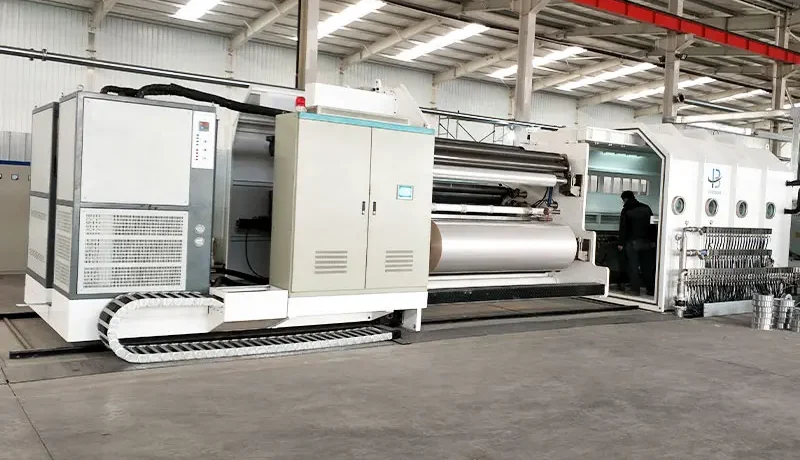
Coating Multiple Metals on One Machine: What to Know Before Ordering a Vacuum Metallizer Machine
Most vacuum metallizers spend their entire working lives coating one material: aluminum. The evaporation boats, the vacuum pumps, the chamber geometry — everything optimizes for aluminum’s 1,200°C evaporation temperature and its forgiving deposition characteristics.
Then a converter gets an inquiry from a customer who wants copper-metallized film for EMI shielding. Or silver-coated fabric for medical gowns. Or zinc sulfide for holographic security labels. The converter asks: “Can my aluminum metallizer run these materials too?”
The honest engineering answer is: sometimes yes, but never without modifications. And the modifications you need depend on which materials you want to run, how often you plan to switch between them, and what quality specifications your customers demand. This article explains the three hardware dimensions — evaporation source compatibility, pump and vacuum configuration, and cross-contamination prevention — that determine whether a single machine can coat multiple metals successfully, or whether you need separate dedicated machines.
At Qingzhou Tempo Machinery Technology Co., Ltd., our team of senior coating experts has designed multi-material configurations for converters worldwide. This article shares the technical framework we use to evaluate every multi-material inquiry.
1. Why Different Metals Need Different Machine Configurations
1.1 The Physics Problem: Every Metal Evaporates Differently
The core challenge of multi-material metallizing is simple: different metals have different evaporation temperatures, different wetting behaviors on boat surfaces, and different vacuum requirements. A machine optimized for aluminum at 1,200°C and 10⁻³ mbar will not automatically work for copper at 1,300°C — and certainly not for titanium at 1,700°C.
Notice the temperature gaps. A ceramic boat that easily reaches 1,200°C for aluminum may struggle to sustain 1,350°C for copper — especially over a full production shift where heat loss to the water-cooled drum and chamber walls increases the power demand. Moreover, the boat material itself reacts differently with each metal: copper wets TiB₂-BN boat surfaces differently than aluminum, affecting the evaporation rate and the boat’s service life.
2. Hardware Requirement 1: Compatible Evaporation Sources
2.1 The Heart of the Multi-Material Problem
The evaporation source is where the metal transforms from solid wire to vapor — and it is the single most material-specific component in the entire machine. A boat that evaporates aluminum efficiently for 15 production runs may fail after 3 runs with copper, or contaminate a silver coating with residual aluminum.
2.2 Ceramic Boat Compatibility: Which Metals Work
Standard TiB₂-BN ceramic evaporation boats — the workhorse of the aluminum metallizing industry — can run several metals, but with important caveats:
2.3 Induction Heating Graphite Crucible: Broader Material Range
The graphite crucible in Tempo Machinery’s Induction Heating Vacuum Metallized Machine offers superior material compatibility compared to ceramic boats. Graphite withstands higher temperatures, provides a more uniform heating profile, and does not react with many metals at evaporation temperatures.
Key advantages for multi-material use:
- Higher temperature ceiling: Graphite retains structural integrity above 2,000°C — well beyond the evaporation temperature of copper and silver. The induction heating system delivers the higher power density needed for these materials without the localized overheating that damages ceramic boats.
- Chemical compatibility: Graphite does not react with aluminum, copper, or silver at typical evaporation temperatures — eliminating the boat-material interaction that shortens ceramic boat life with aggressive metals.
- Easier material changeover: You drain the crucible of residual molten metal at the end of a run, and the crucible is ready for a different material after cleaning. You do not accumulate the mixed-metal contamination that builds up on boat surfaces over multiple runs.
However, graphite crucibles have limitations: they react with oxygen at high temperatures (requiring good vacuum), and they do not work with materials that form stable carbides (titanium, for example, reacts with graphite to form titanium carbide). For titanium and other refractory metals, electron beam evaporation is typically the only viable thermal evaporation method.
2.4 Dedicated Source per Material: The Cleanest (and Most Expensive) Solution
For converters who coat multiple metals regularly — for example, aluminum packaging film on Monday through Thursday and copper shielding film on Friday — the cleanest engineering solution is two dedicated evaporation sources in one machine. Each source operates independently. When you switch materials, you power down one source, raise the other, and coat the new material from a source that has never seen the previous metal.
Tempo Machinery’s Vacuum Metalizer for Zinc Sulfide Film already incorporates this philosophy: its special design of moving evaporation section and wire-feeding section isolates the ZnS source from the rest of the machine, reducing leakage and enabling faster boat changes. This same design principle extends to custom multi-source configurations for converters running two or three different metals.
Cost impact: A multi-source configuration adds 20–40% to the machine price compared to a single-source metallizer of the same chamber size. You pay for the extra source hardware, the additional power supply capacity, and the more complex control system. However, this premium is typically less than the cost of two separate machines — and the single-machine solution saves factory floor space, operator headcount, and utility connections.
3. Hardware Requirement 2: Vacuum Pump Configuration
3.1 Different Materials, Different Vacuum Demands
The vacuum system does not just evacuate air — it removes the outgassing products from the evaporation process itself. Different materials generate different outgassing loads:
- Aluminum: Relatively clean evaporation. The main vacuum challenge is hydrogen outgassing from molten aluminum (dissolved hydrogen from the smelting process). Standard diffusion pump + mechanical pump + booster configuration handles this well.
- Copper: Copper oxidizes rapidly — any residual oxygen in the chamber reacts with hot copper to form copper oxide, which contaminates the coating and reduces the effective evaporation rate. Copper requires faster pump-down to lower base pressure before evaporation begins, and higher pumping speed during evaporation to remove oxygen released from the substrate and chamber walls at the elevated copper evaporation temperature.
- Silver: Clean evaporation with minimal outgassing. Standard vacuum configuration is adequate.
- Zinc Sulfide: ZnS sublimation releases sulfur, which reacts with pump oil and degrades it rapidly. ZnS machines require dedicated pump protection — cold traps, oil filtration systems, or dry (oil-free) pumping systems — to prevent sulfur contamination of the pump fluid. Additionally, ZnS benefits from the ideal vacuum degree that Tempo Machinery’s ZnS model maintains specifically for this material.
- Titanium: Titanium is a getter material — it absorbs residual gases (oxygen, nitrogen, hydrogen) during evaporation. This actually improves the vacuum, but it means the coating composition is sensitive to the residual gas background. Ultra-high vacuum (10⁻⁶ mbar or better) is typically required for clean titanium deposition.
3.2 The Pump Sizing Decision
If you design a multi-material machine, you must size the pump package for the most demanding material — not the average. That means:
- Higher pumping speed for copper and titanium applications (removing more outgassing at higher temperatures)
- Cold traps or cryo-panels for ZnS and titanium (protecting pumps from reactive byproducts and improving ultimate vacuum)
- Larger roughing pump capacity if frequent material changes require more pump-down cycles (opening the chamber between materials for cleaning)
- Oil filtration or dry pump consideration for ZnS (sulfur-contaminated oil loses lubricity and vacuum performance)
The pump package for a multi-material machine typically costs 15–30% more than a single-material aluminum metallizer of the same chamber size. This cost represents insurance against the day you switch from aluminum to copper and discover your pumps cannot maintain the required vacuum.
4. Hardware Requirement 3: Cross-Contamination Prevention
4.1 The Invisible Quality Killer
Cross-contamination happens when residual metal from a previous coating run contaminates the current run. The mechanisms are subtle:
- Residual metal in the evaporation source: After you finish an aluminum run, a small pool of molten aluminum remains in the boat or crucible. If you add copper wire on top of that aluminum pool, the first several hundred meters of “copper” coating are actually an aluminum-copper alloy — visually different, electrically different, and completely unacceptable to a customer who ordered pure copper coating.
- Chamber wall deposits: During aluminum evaporation, aluminum vapor condenses not just on the substrate film but on every surface inside the vacuum chamber — walls, shields, drum housing, pump baffles. When you later evaporate copper at a higher temperature, the radiant heat can partially re-evaporate those aluminum deposits, contaminating the copper coating with trace aluminum.
- Substrate carryover: The same unwind/rewind system, tension rollers, and coating drum that handled aluminum-coated film now handle copper-coated film. Residual aluminum particles on roller surfaces transfer to the new copper coating.
4.2 Design Solutions for Contamination Control
The most effective contamination control strategy we have seen in production is the shield liner system: removable stainless steel or aluminum sheet liners that cover the internal chamber walls. After an aluminum run, the crew removes the aluminum-coated liners and installs a clean set for the copper run. The liners are cleaned offline (sandblasting or chemical cleaning) while the machine coats the next product. This approach adds 30–60 minutes to the material changeover time but virtually eliminates chamber-wall cross-contamination.
Tempo Machinery can incorporate removable shield liners, dedicated boat/crucible quick-change mounts, and plasma cleaning systems into your multi-material machine configuration. Contact our engineering team to discuss contamination control requirements for your specific material combination.
5. Production Realities: What Multi-Material Operation Looks Like Day to Day
5.1 The Changeover Time Penalty
Engineering a machine that can run multiple materials is one challenge. Operating it in production with frequent material changes is another — and it is the operational reality that determines whether the multi-material approach is economically viable.
If you change materials once per week, the 3-hour changeover costs approximately 3% of the machine’s weekly production time — probably acceptable. If you change materials daily, the same changeover consumes 15% of production time — and the lost coating hours may exceed the profit from running the secondary material.
5.2 The Truth About “Universal” Metallizers
Every vacuum metallizer manufacturer has confronted the request for a machine that coats “any metal.” The honest answer: a machine that coats aluminum, copper, silver, zinc sulfide, and titanium equally well does not exist — because the evaporation physics, vacuum requirements, and contamination risks are fundamentally different for each material.
What does exist is a machine configurable for a specific combination of 2–3 materials, with the hardware trade-offs explicitly designed into the specification before the machine is built. The converter who orders a “multi-material metallizer” without specifying which materials risks receiving a machine that coats all of them poorly rather than one material well.
6. Decision Framework: Is Multi-Material Right for You?
Before specifying a multi-material machine, answer these questions honestly:
1. What is your primary material — and what is your secondary? If your production is 90% aluminum and 10% copper, a machine optimized for aluminum with copper capability as a secondary function may work. If your production splits 50/50 between two materials, you need a machine designed for that balance — or two separate machines.
2. How often will you switch materials? Daily changes demand fast-changeover features (dedicated sources, quick-change shields, recipe-based parameter management). Monthly changes justify a simpler configuration where the changeover time is amortized over a long production run.
3. What coating quality does your customer require? A customer who accepts “copper-colored” film may tolerate trace aluminum contamination. A customer who measures the film’s electrical conductivity will detect contamination instantly — and reject the product. High-purity coating requirements demand dedicated sources and aggressive contamination control.
4. What is your budget? A multi-source configured machine costs 20–50% more than a single-material machine. Compare that premium to the cost of a second machine. If two machines fit your facility and budget, they eliminate the changeover time penalty and cross-contamination risk entirely — often the better long-term investment.
7. Frequently Asked Questions (FAQ)
Q: Can my existing aluminum metallizer be retrofitted to run copper or silver?
A: It depends on your existing machine’s configuration. A standard aluminum metallizer with ceramic boats can run copper with modifications — primarily higher-capacity boat power supplies, possibly different boat geometry, and a faster pump package if your current pumps are marginal. Silver typically requires molybdenum or tantalum boats (different boat material) and often a dedicated evaporation source to prevent aluminum contamination. Titanium cannot run on a standard resistance-boat metallizer — it requires electron beam evaporation. A full technical evaluation of your existing machine by a qualified engineer is essential before attempting any material change. Tempo Machinery’s technical team can perform this evaluation — contact us with your machine specifications and the materials you want to run.
Q: How does Tempo Machinery configure a multi-material machine?
A: We start by confirming your specific material combination — exactly which metals or compounds you plan to coat, in what production ratio, and at what quality specifications. Then we design the machine around those materials: selecting the appropriate evaporation source type (ceramic boat, graphite crucible induction, or specialized source for ZnS), sizing the vacuum pump package for the most demanding material, incorporating contamination control features (removable shield liners, dedicated source isolation, plasma cleaning if needed), and programming the PLC with separate recipe parameter sets for each material. The machine ships fully configured and tested for your specific material combination — not as a “universal” machine that requires field modifications after delivery. Contact our engineering team to discuss your material requirements.
Q: Does the induction heating model offer better multi-material flexibility than the suspension model?
A: Yes — significantly. The graphite crucible in the induction heating model handles a wider range of materials than ceramic boats because: (1) graphite withstands higher temperatures, enabling copper and silver evaporation at full power without boat degradation; (2) the crucible drains cleanly between materials (residual molten metal pours out at the end of a run), simplifying contamination control; (3) the induction heating system delivers more power per unit of evaporation area for high-temperature materials. However, the induction model still has limitations: it cannot run titanium (TiC formation), and ZnS requires a different evaporation geometry (sublimation from powder or granular form rather than melting from wire). For detailed material compatibility of the induction model, see our article: Gold and Silver Yarn Production: How Induction Heating Metallizers Revolutionize the Textile Industry.
Q: What is the most common multi-material combination that Tempo Machinery customers order?
A: The most common combination is aluminum + copper — aluminum for standard packaging and decorative films during most of the week, copper for EMI/RFI shielding film and conductive applications during dedicated production windows. This combination works well because both materials use ceramic boat technology, the temperature difference is manageable (100–150°C), and the market demand for copper-metallized films is growing — particularly in electronics packaging and 5G infrastructure applications. The second most common is aluminum + ZnS, typically for converters who produce both standard metallized packaging and holographic security films. This combination requires a more specialized machine configuration because ZnS has fundamentally different evaporation characteristics than aluminum.
Q: Can the same machine coat both film and paper substrates with different metals?
A: Technically possible, but operationally challenging. A machine that handles both film and paper needs a web path and tension control system compatible with both substrates — paper requires lower tension, wider roller spacing, and gentler handling. Adding multi-material capability to this already-complex configuration increases cost and changeover time. We usually recommend separate machines for film vs. paper production — the operational simplicity of dedicated machines typically outweighs the capital savings of a multi-substrate, multi-material combination. For paper-specific metallizing, see our Aluminum Paper Vacuum Metallized Machine.
Q: What maintenance practices differ for multi-material machines compared to single-material machines?
A: Multi-material machines require more rigorous changeover documentation and cleaning discipline. Key additional practices: (1) Maintain a changeover log recording which material ran last, when the chamber was cleaned, and which shield liners are currently installed — this prevents the “wrong material” startup error. (2) Schedule more frequent pump oil changes — particularly if running ZnS (sulfur contamination) or copper (higher outgassing load). (3) Inspect boat/crucible contact surfaces for cross-material alloy formation — aluminum-copper alloys at the boat contact point can alter electrical resistance and affect evaporation rate. (4) Dedicate separate sets of web-handling consumables (cleaning wipes, gloves, tools) per material group to prevent cross-contamination during changeover cleaning. Tempo Machinery provides a detailed maintenance and changeover procedure manual with every multi-material machine configuration.
8. Conclusion
A multi-material vacuum metallizer is not a standard product with a checkbox option. It is an engineered configuration — a machine designed from the start for a specific combination of materials, with the evaporation sources, vacuum pumps, contamination controls, and changeover procedures specified before the first bolt is machined.
The converters who succeed with multi-material machines are those who define their material combination precisely before ordering — and who accept that a machine optimized for 2–3 materials will never match the throughput of a dedicated single-material machine for any one of them. The trade-off is flexibility versus efficiency, and the balance point is different for every production profile.
Qingzhou Tempo Machinery Technology Co., Ltd. — with its own 10,000-ton/year film production line, a team of senior coating and mechanical engineers, and a track record of custom multi-material configurations for customers worldwide — provides the engineering support to determine whether a multi-material machine makes sense for your business, and to configure it correctly if it does. Our full metallizer product range includes suspension-type, induction heating, aluminum paper, and ZnS dielectric coating machines — all available with custom multi-material configurations.
Contact our engineering team to discuss your multi-material coating requirements and request a technical evaluation and quotation.