


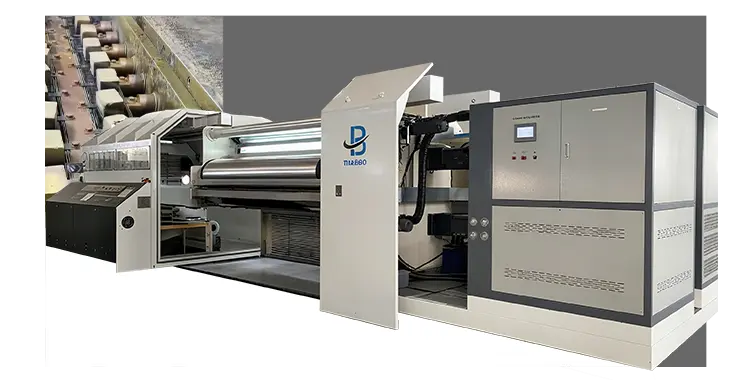
How to Speed Up Evaporation Boat Replacement Without Compromising Vacuum Quality
In high-volume vacuum metallizing for cigarette packaging and wine labels, production managers face one recurring bottleneck: evaporation boat replacement. Every minute you spend on maintenance translates directly into lost output. However, rushing the job often leads to vacuum leaks, uneven coating, and costly rework. For background on how resistive evaporation fits into the broader PVD landscape, the Society of Vacuum Coaters (SVC) provides authoritative technical resources on evaporation source design and process optimization.
Tempo Machinery has tackled this problem head-on with a re-engineered evaporation source in our Aluminum Paper Vacuum Metallized Machine. This article shares the innovative design features behind faster boat changes, along with practical techniques that preserve your vacuum quality throughout the process.
Why Evaporation Boat Replacement Becomes a Bottleneck
In a conventional metallizer, operators typically face three pain points when replacing evaporation boats:
- Cramped access. Traditional machines arrange boats in a tight straight line, so reaching the middle units forces you to work around adjacent heat shields and electrodes.
- Aluminum slag buildup. Molten aluminum splashes onto side-mounted clamps, essentially welding them shut. Operators must then chip away hardened material or use excessive force — risking damage to seals.
- Inconsistent seating. After a rushed replacement, poorly seated boats cause micro-arcing, which degrades vacuum stability and shortens the life of the next boat.
Consequently, operators often need 30 to 45 minutes for a full boat set change. In a three-shift operation, that adds up to several hours of lost production each week. For a deeper dive into how evaporation boat geometry and material selection affect coating uniformity, consult the technical papers published by the American Vacuum Society (AVS).
The Tempo Innovation: Staggered Arrangement & Top-Clip Design
To solve these problems, Tempo Machinery introduced two key design changes in the Aluminum Paper Vacuum Metallized Machine: a staggered (zigzag) layout and a top-clip locking mechanism.
1. Staggered Layout Creates Operator Breathing Room
Instead of crowding all boats into a single straight row, our engineers positioned them in an alternating pattern. This staggered arrangement gives you significantly more clearance around each individual boat.
The immediate benefit: you can remove and install each boat without bumping into neighboring components or accidentally disturbing a correctly seated unit. Furthermore, the open layout makes visual inspection far easier — you can quickly scan the entire evaporation source before closing the chamber.
2. Top-Clip System Keeps Clamps Clean and Accessible
Traditional side-mounted clamps sit directly in the path of aluminum splatter. Over time, molten metal accumulates around the locking mechanism, making it nearly impossible to release without tools and considerable effort.
Our top-clip design moves the clamp above the primary splatter zone. This vertical orientation achieves two things:
- Faster release. You simply lift the clip from above rather than fumbling with side bolts or specialized wrenches. The drop-in-and-lock motion cuts physical replacement time by up to 40%.
- Cleaner operation. Because the clip stays out of the heaviest splatter area, it requires far less cleaning between replacements. This alone saves several minutes per boat.
As a result, operators complete a full boat set change in roughly 20 minutes rather than 35–45.
Step-by-Step Quick Replacement Guide
Follow these steps to maximize speed while protecting your vacuum system:
-
Pre-cool the chamber properly. Our aluminum paper metallizer features an optimized cooling cycle that shortens compressor working time. You can open the chamber sooner without risking thermal shock to vacuum valves. Wait for the temperature indicator to fall below the safe-open threshold, then proceed immediately — our machine reaches this point faster than conventional designs.
-
Leverage the staggered layout for parallel work. Two operators can work simultaneously on opposite sides of the staggered row without interfering with each other. One person handles boats 1–7 while the other handles 8–14. This parallel workflow nearly halves the total time.
-
Release top clips in sequence. Work from left to right, releasing each top clip with a single upward motion. Unlike side clamps, you do not need prying tools. Collect old boats in a heat-resistant tray placed directly below the work area.
-
Quick-clean before installing new boats. The staggered arrangement gives you clear sightlines to the electrode surfaces. Use a brass brush to remove any residual aluminum from the contact points — this takes roughly 10 seconds per position rather than the minute or more required in cramped conventional layouts.
-
Drop in new boats and lock top clips. Seat each new boat vertically, then snap the top clip down. The clip applies consistent downward pressure, ensuring perfect electrical and thermal contact every time. You can visually confirm proper seating without needing to run a test pump-down.
Protecting Vacuum Quality During Fast Replacement
Speed means nothing if the next batch shows pinholes or adhesion failure. Here is how our design helps you maintain vacuum integrity:
Consistent contact eliminates micro-arcing. The top-clip system applies uniform pressure across every boat. Inconsistent clamping force — a common issue with traditional side bolts that operators tighten by feel — causes gaps between the boat and electrode. These gaps produce micro-arcing during operation, which introduces contaminants into the vacuum and creates pinholes in the coating. The top-clip design removes this variable entirely.
Reduced particle contamination. Easier cleaning means operators actually clean thoroughly rather than rushing past dirty surfaces. The layout leaves fewer hiding spots for aluminum flakes, so a quick wipe removes virtually all loose particles before you close the chamber.
Shorter pump-down cycles. Because our design minimizes leak paths at the evaporation source, the vacuum system reaches operating pressure more quickly after a boat change. Our previous article on energy-saving strategies explains how optimized pump-down directly lowers energy costs.
Maintenance Habits That Extend Boat Life
Fast replacement does not mean frequent replacement. These habits help you get the most out of each boat set:
- Rotate boat positions every two cycles. Even with uniform clamping, edge boats tend to experience slightly different thermal conditions than center boats. Rotating positions balances wear across the set.
- Inspect top clips weekly. Check that each clip still applies firm pressure. A loose clip causes the same problems as a loose side bolt — poor contact, arcing, and premature boat failure.
- Stock genuine Tempo spare parts. Using compatible boats and clips ensures the design geometry works as intended. Our spare parts service keeps all OEM components in inventory for immediate dispatch.
- Record boat change times. Track the duration of each replacement across shifts. Rising change times often signal that the team has fallen back into old habits or that clips need attention.
Frequently Asked Questions
Q: How does the staggered layout actually speed up boat replacement?
The staggered arrangement provides more clearance around each boat. Operators can reach individual units without disturbing neighboring components, and two people can work in parallel on opposite sides of the row. This combination cuts total replacement time by roughly 40% compared to traditional straight-line layouts.
Q: Do top clips hold boats as securely as side clamps?
Yes — in fact, they hold more consistently. Side clamps rely on operator feel to achieve the correct tightness. The top-clip system applies uniform pressure mechanically, so every boat gets identical clamping force. This consistency improves electrical contact and reduces the risk of micro-arcing.
Q: Can I retrofit an existing metallizer with this evaporation source design?
The staggered top-clip design requires a purpose-built chamber configuration. Retrofitting is generally not practical because the chamber structure and mounting points differ from conventional layouts. However, upgrading to a new Tempo Aluminum Paper Vacuum Metallizing Machine delivers the full productivity benefit. Contact our team for a cost-benefit analysis based on your current downtime data.
Q: How do you train operators on the new system?
Our technical training and support program covers the complete boat replacement workflow, from pre-cooling procedures to post-change vacuum verification. Most operators reach full proficiency within two to three supervised change cycles because the top-clip motion is intuitive.
Q: What materials can the aluminum paper metallizer handle?
The machine handles roll materials from 38g to 150g, including paper substrates for high-grade cigarette packaging and wine labels. For gold and silver wire coating and medical-grade thick-layer applications (>800 Å), our Induction Heating Vacuum Metallized Machine offers a graphite crucible evaporation source with ultra-low pinhole rates.
Q: Does faster boat replacement reduce overall energy consumption?
Absolutely. Shorter maintenance windows mean the vacuum pumps and compressors spend less time running in idle or restart modes. Combined with the improved pump-down efficiency of our clean evaporation source design, customers typically see measurable energy savings. Our energy-saving strategies guide covers this topic in depth.
Conclusion
Evaporation boat replacement does not have to be a production bottleneck. With Tempo Machinery’s staggered top-clip evaporation source, operators achieve faster changeovers, cleaner chambers, and more consistent vacuum quality — all at once. For manufacturers producing high volumes of metallized cigarette packaging, wine labels, and decorative paper, this translates directly into more output per shift and a lower cost per square meter.
Explore the Aluminum Paper Vacuum Metallized Machine or request a technical consultation from our engineering team.