


Gold and Silver Metallic Yarn: Coating Technology Behind Decorative Textiles
Walk through a fabric market and you will spot them immediately: shimmering threads that catch every glance, woven into saris, festive garments, embroidery, and gift ribbons. That brilliance comes from gold and silver metallic yarn, and behind its sparkle lies a surprisingly precise coating process. In this article, we explain how vacuum metallizing creates metallic yarn, why this technology replaced traditional metal wire, and which machine features make the difference between premium thread and defective rejects. To begin with, let’s clarify what metallic yarn actually is.
What Is Metallic Yarn?
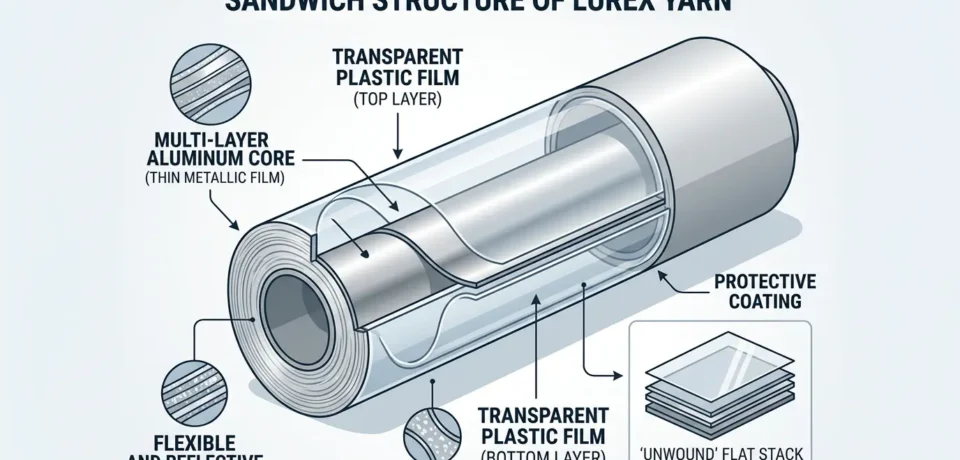
Metallic yarn starts as a thin plastic film — usually PET or polyester — that carries a microscopically thin aluminum layer. Manufacturers then cut the coated film into narrow strips and wrap or twist these strips around a core fiber to form a soft, flexible thread. The aluminum coating supplies the mirror-like shine, while the plastic base provides strength and flexibility.
Why use coated film instead of real metal wire? Above all, a true gold or silver wire would weigh far too much, cost a fortune, and break easily during weaving. Vacuum metallizing deposits only nanometers of aluminum, which means the yarn stays light, supple, and affordable while still delivering the metallic glow that decorative textiles demand. In short, metallic yarn gives designers the look of precious metal without its practical drawbacks.
The Coating Challenge: Pinholes Ruin Yarn
Metallic yarn production demands a level of coating perfection that ordinary packaging rarely needs. Here is why: converters draw yarn through weaving looms, embroidery machines, and braiding equipment at high speed, and every millimeter of the thread must reflect light evenly. A single pinhole — a tiny uncoated spot — creates a visible dark fleck, and with thousands of meters of yarn on one roll, even a low pinhole rate produces thousands of defects.
Furthermore, the yarn surface must withstand friction. It slides against guides, needles, and neighboring threads, so the aluminum layer needs strong adhesion to survive the process without flaking. Consequently, gold and silver wire coating pushes evaporation technology to its limits: the machine must deposit a dense, continuous, well-adhered layer at production speed.
How the Right Evaporation Source Solves the Problem
Traditional evaporation sources struggle with this exact challenge. Unstable vapor streams and temperature fluctuations create thin spots and pinholes, forcing manufacturers to scrap entire batches. As a result, the evaporation source design becomes the deciding factor for metallic yarn quality.
This is where induction-heated crucibles shine. Instead of an open ceramic boat, the machine uses a graphite crucible heated by electromagnetic induction, which maintains a stable molten pool of aluminum and produces an exceptionally even vapor stream. Tempo Machinery’s induction heating vacuum metallized machine employs this graphite crucible evaporation source, and the design eliminates the drawbacks of traditional evaporation processes. The resulting pinhole rate drops so low that the machine fully meets the requirements for gold and silver wire coating. Furthermore, the stable evaporation supports ultra-thick aluminum layers beyond 800 Å, which matters for deep-dye and specialty yarns that need extra opacity.
From Coated Film to Finished Yarn
The journey from machine to textile follows a clear sequence. First, the vacuum metallizer coats the PET base film with aluminum, producing rolls of brilliant, mirror-finish film. Second, converters split the coated film into narrow strips of the required width, often just a few millimeters. Third, spinning machines wrap the strips around a polyester or cotton core to create round, flexible yarn. Finally, dyers and finishers apply color overlays — transparent dyes let the metallic base glow through, which creates the gold, silver, and rainbow effects on the market.
Each stage depends on the one before it. If the vacuum coating step produces pinholes or uneven brightness, no amount of spinning or dyeing will fix the result. That is why yarn producers invest so heavily in the coating stage of their line.
Applications of Gold and Silver Metallic Yarn
Gold and silver metallic yarn appears in more products than most people realize. Textile and apparel markets use it for festive wear, saree borders, embroidery threads, and decorative fabrics. Craft and gift industries weave it into ribbons, gift-wrap cords, and party decorations. Moreover, high-end applications include brocade fabrics, upholstery trims, and liturgical garments, where the metallic accent signals luxury. In every case, the coating quality determines whether the product looks premium or cheap.
Choosing Equipment for Metallic Yarn Production
If you plan to enter metallic yarn production, your machine choice should center on three factors: pinhole rate, coating uniformity, and thickness capability. Ask suppliers for pinhole-rate data on yarn-grade film, not just packaging-grade film, because the requirements differ dramatically. Verify that the evaporation source maintains a stable vapor stream across the full roll width, and confirm that the machine can reach the thickness your dyeing process needs. Browse Tempo Machinery’s product range to compare configurations, or contact the team for a recommendation based on your yarn specifications. Technical training and after-sales support also matter, because process optimization for yarn film differs from standard packaging runs. For a broader view of how evaporation compares with other coating technologies, our guide to vacuum metallizing vs. sputtering vs. CVD offers useful context.
Conclusion
Gold and silver metallic yarn proves that vacuum coating technology can serve beauty as well as function. The process starts with a pinhole-free aluminum layer on PET film, and every subsequent step — slitting, spinning, dyeing, weaving — builds on that foundation. As a result, producers who invest in the right evaporation technology gain a durable competitive edge in the decorative textile market. We hope this guide helps you understand the technology behind the sparkle. If you produce or plan to produce metallic yarn, start with your pinhole and thickness requirements, then choose equipment that can deliver them consistently.
FAQ
1. What is metallic yarn made of?
Metallic yarn typically consists of a thin PET or polyester film coated with a nanometer-scale aluminum layer, cut into narrow strips and wrapped around a core fiber. The aluminum supplies the shine, while the plastic base provides flexibility and strength.
2. Why does pinhole rate matter so much for metallic yarn?
Pinholes appear as dark flecks on the reflective surface. Because yarn production uses thousands of meters of coated film per roll, even a low pinhole rate creates thousands of visible defects, so yarn-grade film demands a much lower pinhole rate than packaging film.
3. Why do yarn producers prefer induction-heated crucibles?
Induction-heated crucibles maintain a stable molten aluminum pool and produce an exceptionally even vapor stream. This design reduces pinholes dramatically and supports ultra-thick layers, which makes it ideal for gold and silver wire coating.
4. Can standard packaging metallizers coat yarn film?
They can run the process, but most packaging-grade machines cannot hold the extremely low pinhole rates and uniformity that yarn production demands. Machines with induction-heated graphite crucibles deliver the precision that decorative textile applications require.
5. How thick is the aluminum layer on metallic yarn film?
The coating typically ranges from a few hundred angstroms up to more than 800 Å for deep-dye and specialty yarns. The thickness target depends on the desired opacity and how the yarn will be dyed and finished.