


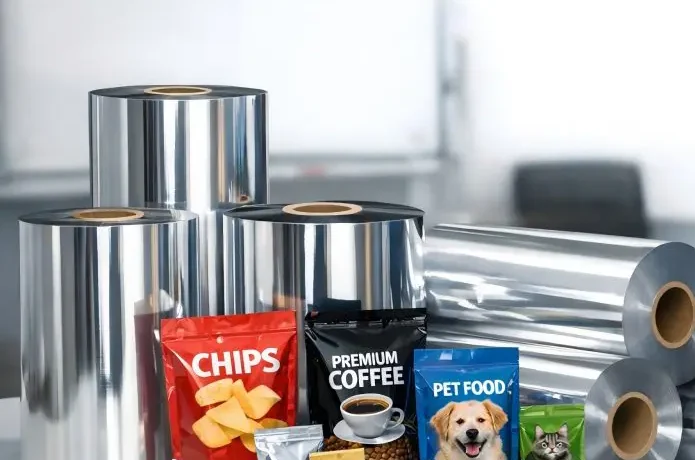
What Is Optical Density (OD) in Metallized Films — and Why It Matters for Your Packaging
Ask a metallizer operator how they judge a coated roll, and the first number they quote is usually optical density, or OD. Buyers of metallized film hear the term constantly, yet many cannot explain what it actually measures or why a 2.2 OD roll outperforms a 1.8 OD roll. In this guide, we decode optical density in plain language, show you how manufacturers measure it, and help you specify the right OD value for your packaging. To begin with, let’s answer the basic question: what exactly does optical density tell you?
What Is Optical Density?
Optical density measures how much light a coating blocks. Technically, OD equals the negative logarithm of the light transmitted through the film: a higher OD means less light passes through, which means a denser, more opaque metal layer. For metallized film, this single number captures the practical thickness and continuity of the aluminum coating in one convenient reading.
Why does this matter for packaging? Above all, the OD value links directly to barrier performance. A denser aluminum layer blocks more oxygen, moisture, and light, which extends shelf life for food and pharmaceuticals. Furthermore, OD predicts visual appearance: higher-density coatings reflect more light and produce a brighter, more premium metallic finish. In short, OD acts as the quickest health check for a metallized film roll.
How Manufacturers Measure Optical Density
Measuring optical density requires a simple but precise instrument called a transmission densitometer. The operator places a sample of metallized film over a light source, and the device compares the transmitted light with a reference beam to calculate the OD value. Modern coating lines can even run inline densitometers that sample the moving web continuously, so operators catch drift before it becomes a quality issue.
In practice, most film converters target OD values between 2.0 and 3.0. Standard food packaging typically sits around 2.2–2.5, which delivers strong barrier at reasonable material cost. Specialty products push higher: deep-dye applications and some luxury packaging target 2.8–3.0 for maximum opacity and shine. As Dunmore Corporation notes, the deposited layer remains extremely thin, so even high OD values add only nanometers of material — the reason metallized film stays lightweight and flexible.
Optical Density vs. Aluminum Layer Thickness
Many buyers assume OD and layer thickness mean the same thing. In reality, OD reflects how much light the coating blocks, while thickness measures the physical depth of the aluminum. The two usually move together — more aluminum means higher OD — but pinholes complicate the relationship. A thick layer full of microscopic pinholes can transmit more light than a thinner, flawless one, which makes OD a better quality indicator than thickness alone. Our guide to aluminum layer thickness and barrier performance explores this connection in depth and explains how to balance both specifications.
Consequently, reputable manufacturers specify and verify both values. They control thickness through evaporation rate and web speed, then confirm the result with OD measurement. This dual approach catches defects that thickness checks would miss, such as sparse deposition or excessive pinhole formation.
How Optical Density Affects Packaging Performance
The OD value influences three aspects of your packaging. First, barrier performance: higher OD blocks more oxygen and water vapor, which protects sensitive products like coffee, snacks, and pharmaceuticals. Second, light protection: dense coatings shield light-sensitive contents, including certain vitamins, oils, and photographic materials. Third, appearance: high-OD films reflect a brilliant, consistent metallic finish that signals premium quality on the shelf.
However, higher OD does not always mean better. Excessive coating wastes aluminum, increases cost, and makes the film stiffer and harder to convert. Moreover, very heavy coatings can complicate recycling streams. As a result, the smart target is the minimum OD that meets your barrier and appearance requirements — not the highest number the machine can produce.
How Coating Lines Control Optical Density
Modern vacuum metallizers control OD through three main levers: evaporation source power, aluminum feed rate, and web speed. Raise the evaporation rate or slow the web, and the deposited layer thickens, pushing OD up. Conversely, faster web speeds thin the layer and reduce OD. Automatic control systems manage these variables in real time, maintaining consistent OD from roll to roll.
The evaporation source technology also sets the practical OD ceiling. Tempo Machinery’s induction heating metallizer produces ultra-thick aluminum layers beyond 800 Å, which supports very high OD values for demanding applications such as medical packaging. Meanwhile, fully automatic suspension coating machines combine stable tension control with precise evaporation management, helping operators hold a tight OD window across long production runs.
Specifying OD for Your Product
When you order metallized film or plan a new coating line, specify OD explicitly rather than relying on vague terms like “heavy” or “bright.” For reference:
- Food packaging (snacks, coffee, candy): OD 2.2–2.5
- Pharmaceutical and medical packaging: OD 2.5–3.0
- Decorative and luxury applications: OD 2.8–3.0
- Light metallization (laminating base films): OD 1.8–2.2
If you produce the film yourself, your machine supplier can help you map these targets to process parameters. Tempo Machinery offers technical training and process optimization support to help customers lock in consistent OD values, and the team can recommend the right machine configuration for your target range.
Conclusion
Optical density gives packaging buyers and converters a fast, reliable read on metallized film quality. It predicts barrier performance, light protection, and visual appeal, and it often reveals coating defects that thickness measurements miss. As a result, specifying the right OD range matters as much as choosing the right substrate or machine. We hope this guide clarifies the number behind the shine. If you plan to add a coating line or improve your film consistency, start with your target OD, then work backward to the equipment that can hold it.
FAQ
1. What is a good optical density for metallized film?
For most food packaging, an OD between 2.2 and 2.5 works well. Pharmaceutical and medical packaging typically needs 2.5–3.0, while light metallization for laminating base films can run as low as 1.8–2.2.
2. How is optical density measured?
Manufacturers use a transmission densitometer that shines light through a film sample and compares the transmitted light with a reference beam. Inline densitometers on coating lines measure the moving web continuously to catch drift early.
3. Is higher OD always better?
No. Higher OD means more aluminum, which costs more and makes film stiffer and harder to convert. The best target is the minimum OD that meets your barrier and appearance requirements.
4. What is the difference between optical density and aluminum layer thickness?
Thickness measures the physical depth of the aluminum, while OD measures how much light the coating blocks. They usually correlate, but pinholes can make a thick layer transmit more light than a thinner, flawless one, so OD often gives a better quality picture.
5. How do I increase the OD of my metallized film?
You raise the evaporation source power or aluminum feed rate, or slow the web speed so more aluminum deposits per meter of film. Automatic control systems on modern machines handle these adjustments in real time to maintain consistent OD.