


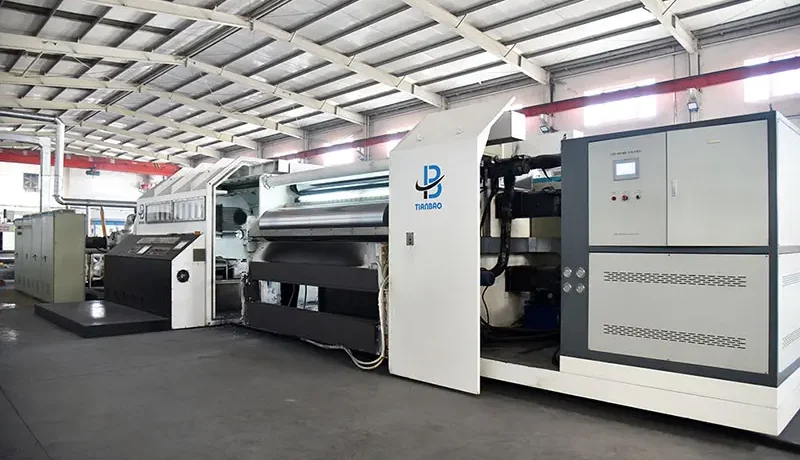
How a Vacuum Coating Machine Works: From Aluminum Evaporation to Finished Metallized Film
Every metallized snack wrapper, coffee pouch, and emergency blanket starts the same way: as plain plastic film on a roll, waiting inside a vacuum coating machine. Most buyers never see what happens behind the chamber door, yet the machine’s internal systems determine everything from film brightness to shelf life. In this article, we take you inside the equipment, step by step, from the moment aluminum wire enters the chamber until a finished metallized film roll exits the line. To begin with, let’s clarify one point: every vacuum coating machine combines five core systems — the chamber, the pumping group, the evaporation source, the web handling system, and the control unit. Each one plays a specific role, and the final film quality depends on how well they work together.
The Vacuum Chamber and Why It Matters
The story starts with the chamber itself. This sealed vessel creates the low-pressure environment that makes the whole vacuum coating process possible. In essence, the chamber must hold the film roll, contain the evaporation source, and keep the pressure low enough for metal vapor to travel in straight lines. Tempo Machinery builds both rectangular and round chamber designs on its fully automatic suspension coating machines, so buyers can match the chamber geometry to their factory layout and roll widths.
Why does the vacuum matter so much? As a result of removing air from the chamber, the aluminum vapor encounters almost no gas molecules on its way to the film surface. Consequently, the coating stays uniform, clean, and free of oxidation. Moreover, a good vacuum prevents the molten aluminum from burning, which would otherwise create dark, patchy deposits instead of a bright mirror finish.
Pumping Down: Building the Vacuum
Before any aluminum melts, the pumping group must remove the air. Rotary vane pumps handle the initial rough vacuum, and Roots (booster) pumps then pull the pressure down to the levels the process demands. In practice, the pump-down time affects cycle efficiency directly, which is why modern machines combine pump control with the evaporation sequence. Notably, Tempo Machinery’s aluminum paper metallizer shortens compressor working time to save energy and extend equipment life — a detail that matters on lines running around the clock.
The control system watches pressure values throughout the cycle and signals the next stage only when the chamber reaches the target level. This automation removes guesswork and lets operators focus on quality checks rather than valve adjustments.
The Evaporation Source: Where Aluminum Evaporates
With the vacuum ready, the machine feeds aluminum wire or aluminum pellets toward the evaporation source. This component heats the metal until it melts and then vaporizes, turning solid aluminum into a molecular stream that flows toward the film. Two main source designs dominate the industry:
- Resistance-heated evaporation boats — Ceramic boats resistively heat as current passes through them, and molten aluminum evaporates from the boat surface. This classic design suits standard packaging films and offers simple maintenance.
- Induction-heated crucibles — A graphite crucible heats through electromagnetic induction, providing a more stable evaporation rate. The induction heating vacuum metallizer uses this design, achieving very low pinhole rates and aluminum layers beyond 800 angstroms for medical packaging.
Why does the source type matter? For example, gold and silver wire coating demands a steady, pinhole-free deposit, and the graphite crucible design delivers exactly that. In contrast, high-speed general packaging lines often favor resistance boats for their simplicity and low running cost. The evaporation source, in short, sets the ceiling on coating quality and thickness.
Web Handling: Moving the Film Under Vacuum
While aluminum vaporizes, the web handling system keeps the film moving at a precise speed. Unwind and rewind shafts, dancer rollers, and tension sensors work together to maintain constant tension, because any slack or tug during deposition creates uneven coating. As Converting Quarterly explains, the web handling system manages unwinding, transport, and rewinding under vacuum — the unsung hero of the whole line.
Meanwhile, the film passes over a cooled drum near the evaporation source. The cool surface helps the aluminum atoms condense quickly, forming a dense, bright layer rather than a soft, hazy one. The combination of stable tension and controlled temperature produces the uniform metallic finish that converters and brand owners expect.
Deposition: Atoms Building a Mirror
Here is where the magic happens. In the vacuum coating process, the vaporized aluminum atoms travel through the chamber and land on the moving film surface, where they condense and grow into a continuous metallic layer. Although the layer measures only a few hundred angstroms, it completely changes the film’s appearance and performance. The deposited metal blocks oxygen, moisture, and light, which directly extends the shelf life of packaged food and medicine.
Two factors control the final layer quality: deposition rate and web speed. For instance, if the machine feeds aluminum too slowly or the film runs too fast, the layer turns thin and translucent. Conversely, oversupply creates a thick, dull coating that wastes material. Modern machines regulate both variables automatically, and operators can tune them for target optical density values between 2.0 and 3.0 for typical food packaging. Our guide to aluminum layer thickness and barrier performance explores this relationship in more detail.
Automation and Control: One Operator, Full Line
Modern vacuum coating machine design leans heavily on automation. PLC-based control systems manage the pump sequence, evaporation power, web tension, and rewinding cycle, which means one operator can supervise a complete coating line. Fully automatic machines also handle loading and unloading sequences, reducing human error and improving repeatability from roll to roll.
Furthermore, automation improves energy efficiency. Instead of running pumps and compressors at full power continuously, the control logic adjusts them according to the process stage. This approach shortens compressor runtime, lowers electricity bills, and extends equipment life — a recurring theme in Tempo Machinery’s equipment lineup.
From Raw Roll to Finished Product: The Complete Cycle
To sum up the journey inside a vacuum coating machine, here is the full cycle in sequence:
- The operator loads the substrate roll and sets process parameters.
- The chamber closes and the pumping group pulls the vacuum.
- The evaporation source heats the aluminum wire until it vaporizes.
- The web system transports the film past the source at constant tension.
- Aluminum atoms condense on the film, forming the metallic layer.
- The finished metallized film winds onto the rewind roll.
- The chamber vents, and the operator unloads a ready-to-convert roll.
For specialty substrates, the machine swaps its evaporation strategy. A zinc sulfide metalizer, for example, deposits high-refractive-index layers onto BOPP and PET for holographic and anti-counterfeiting films, while paper metallizers handle cigarette packaging and wine labels. Regardless of material, the working principle remains the same: evaporate, deposit, and wind.
Choosing a Machine That Matches Your Process
Understanding how a vacuum coating machine works helps you ask the right questions before purchasing. Start with your substrate types, coating width, target thickness, and daily output. Then compare evaporation source options, automation levels, and service support. Tempo Machinery offers customization, spare parts, technical training, and after-sales service worldwide, and the team helps you configure a machine around your specific films. You can contact them directly to discuss your production goals and request a quotation.
Conclusion
A vacuum coating machine transforms raw aluminum wire and plain plastic film into bright, high-barrier metallized film through a carefully orchestrated sequence of vacuum, heat, motion, and control. Each system — chamber, pumps, evaporation source, web handling, and automation — performs a distinct job, and the best machines integrate them seamlessly. We hope this inside look helps you evaluate equipment with confidence. If your line needs upgrading or you plan a new coating operation, start from your process requirements and let the machine match the job.
FAQ
1. How long does it take to coat one roll of film in a vacuum coating machine?
The full cycle typically takes between 30 minutes and a few hours, depending on roll length, coating width, and target layer thickness. Pump-down time and coating speed determine most of the cycle, and fully automatic machines shorten the sequence by automating loading and unloading.
2. What is the difference between resistance boats and induction-heated crucibles?
Resistance-heated boats use electric current to heat a ceramic boat that evaporates aluminum, offering simplicity and low running cost. Induction-heated crucibles use a graphite crucible with electromagnetic heating, delivering a more stable evaporation rate, very low pinhole rates, and the ability to produce ultra-thick coatings above 800 Å.
3. Can one vacuum coating machine handle different film types?
Yes. Most machines coat BOPP, PET, CPP, PE, and PVC simply by adjusting process parameters. Some applications need dedicated machines, such as zinc sulfide coating for holographic films or paper metallizing for cigarette packaging and wine labels.
4. How do operators control coating thickness?
They control thickness through evaporation rate and web speed. Automatic systems regulate both variables to hit a target optical density, typically between 2.0 and 3.0 for food packaging, while medical packaging may require thicker layers.
5. Does automation really reduce operating costs?
Yes. Fully automatic machines reduce labor requirements, improve consistency, and optimize pump and compressor runtime. Shorter compressor working time lowers energy consumption and extends equipment life, which reduces total operating cost per roll.