


What Is Vacuum Metallizing? A Complete Guide to the Process, Equipment, and Materials
Walk into any supermarket and you will notice the glittering snack bags, coffee pouches, and gift wraps that catch the light. That metallic shine often comes from vacuum metallizing, a technology that transforms ordinary plastic film into a mirror-like, protective material. In this complete guide, we explain the vacuum metallizing process step by step, introduce the essential equipment, and review the materials that work best. Whether you plan to upgrade a packaging line or simply want to understand the science, this article gives you a clear starting point.
What Is Vacuum Metallizing?
So what exactly is vacuum metallizing? In essence, this technology deposits a microscopically thin layer of metal — usually aluminum — onto a substrate inside a sealed vacuum chamber. The process belongs to physical vapor deposition (PVD), a family of techniques that evaporate or sputter material and let it condense on a surface. As Dunmore Corporation explains, vacuum metallization bonds metal to a non-metallic substrate through evaporation. Unlike electroplating, vacuum metallizing does not rely on chemical baths or liquid solutions, which makes it cleaner, faster, and far more flexible for roll-to-roll production.
Why does the industry care so much? Above all, metallized film delivers three benefits that packaging brands value: a premium metallic appearance, strong barrier performance, and a lightweight structure. For example, a thin aluminum layer blocks oxygen, moisture, and light far better than uncoated plastic, which directly extends the shelf life of food and pharmaceuticals. Moreover, the metal layer adds only a few nanometers of thickness, so the final film remains thin and easy to print, laminate, or convert.
How the Vacuum Metallizing Process Works
Understanding the vacuum metallizing process helps you appreciate why equipment quality matters. In practice, the operation follows five main steps:
- Loading — An operator mounts the roll of substrate film onto the unwind shaft inside the chamber.
- Pumping down — High-vacuum pumps remove air from the chamber until the pressure drops to a level where aluminum vapor can travel without colliding with gas molecules.
- Evaporation — The machine feeds aluminum wire into heated evaporation sources. Tempo Machinery’s induction heating metallizer, for instance, uses a graphite crucible evaporation source that minimizes pinholes and supports ultra-thick coatings.
- Deposition — The aluminum vapor condenses onto the moving film surface, forming a uniform metal layer at molecular scale.
- Rewinding — The coated film winds onto the rewind roll, ready for slitting, printing, or lamination.
The vacuum itself plays a starring role in this story. Inside the chamber, the low pressure keeps the vapor path clean, prevents oxidation of the molten aluminum, and allows the metal atoms to deposit evenly. Consequently, the quality of the pumping system directly influences coating uniformity, pinhole rate, and final barrier performance.
Essential Equipment in a Vacuum Metallizing Line
The heart of any operation is the vacuum metallizer machine itself. Regardless of brand, a complete system includes several critical components:
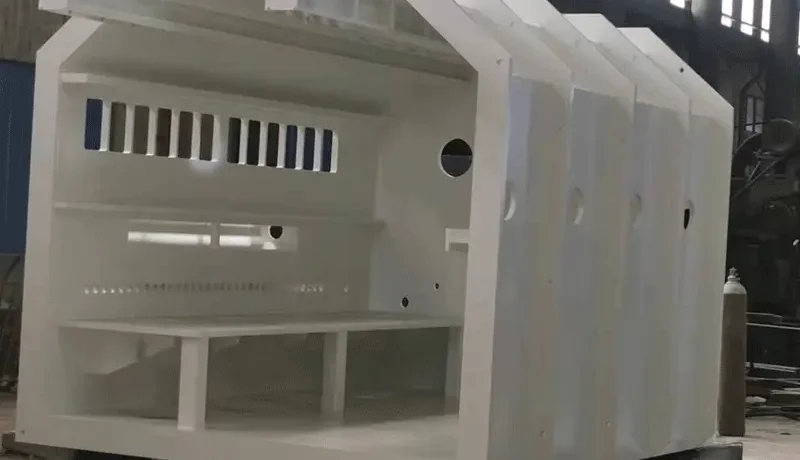
- Vacuum chamber — Rectangular or round designs hold the substrate and maintain the required pressure. Tempo Machinery offers both configurations on its fully automatic suspension coating machine, letting buyers match the chamber shape to their space and production flow.
- Evaporation source — Resistance-heated boats or induction-heated crucibles melt and vaporize the aluminum. This component largely determines coating speed and thickness capability.
- Web handling system — Unwind and rewind shafts, dancer rollers, and tension sensors keep the film moving smoothly. As Converting Quarterly describes, the web handling system manages unwinding, transport, and rewinding under vacuum.
- Pumping system — Rotary vane and Roots pumps work together to achieve and hold the vacuum level that the process demands.
- Control system — PLC-based automation regulates speed, tension, and coating uniformity, which allows a single operator to run the line.
Beyond these core parts, smart buyers also plan for consumables and service. Evaporation boats wear out over time, pumps need routine maintenance, and operators require hands-on training. Tempo Machinery’s service and support program covers spare parts, technical training, remote assistance, and on-site service, which keeps downtime to a minimum.
Materials You Can Metallize
Equipment only delivers results when paired with the right materials. In most cases, manufacturers coat polyolefin and polyester films, including BOPP, PET, CPP, PE, and PVC. Each substrate responds differently to the vacuum metallizing process: PET offers excellent barrier and dimensional stability, while BOPP provides stiffness and clarity at a lower cost. Twisted PET and nylon film also work well for specialty applications that need strength or heat resistance.
Paper deserves special mention, too. The aluminum paper vacuum metallizer handles high-grade cigarette packaging and wine labels, where a bright metallic finish signals premium quality. Furthermore, coating technology goes beyond aluminum; for instance, the zinc sulfide (ZnS) metalizer deposits high-refractive-index layers for holographic and anti-counterfeiting films. In short, the right machine opens the door to nearly any metallized surface your market demands.
What Determines Coating Quality
Quality separates great metallized film from average output. Three indicators matter most. First, optical density (OD) measures how much light passes through the coating; food packaging typically targets OD values between 2.0 and 3.0. Second, adhesion determines whether the metal layer survives printing, lamination, and converting without peeling. Third, pinhole rate reveals the coating’s continuity, because tiny uncoated spots allow oxygen and moisture to sneak through. Our article on aluminum layer thickness and barrier performance explores this relationship in depth and explains how to match thickness targets to your application.
Applications Across Industries
The applications of metallized film span nearly every consumer industry. Food packaging remains the largest segment, where metallized snack, coffee, and candy wrappers protect freshness and attract shoppers. Pharmaceutical packaging relies on the same barrier technology for blister packs and medical pouches, and some medical applications demand aluminum layers beyond 800 angstroms. In addition, holographic anti-counterfeiting films guard brand authenticity on cigarettes, wine, and cosmetics, while reflective films appear in emergency blankets, car sunscreens, and insulated boxes. Meanwhile, decorative markets use metallized film for balloons, sequins, and laser rainbow films. If you want to compare this approach with alternative technologies, our previous guide on vacuum metallizing vs. magnetron sputtering vs. CVD lays out the trade-offs in detail.
Vacuum Metallizing vs. Electroplating
Some buyers ask whether vacuum metallizing can replace electroplating for plastic parts. In short, the two processes serve different purposes. Electroplating produces thicker, tougher metal finishes on molded parts, but it requires wet chemical baths and creates wastewater. Vacuum metallizing, by contrast, offers a thinner decorative finish with no chemical waste, which suits films, paper, and flexible packaging. Consequently, most film converters choose vacuum metallizing for its speed, cleanliness, and roll-to-roll efficiency.
How to Choose the Right Machine
Choosing the right equipment requires matching the machine to your substrate, coating thickness, and output targets. Before you invest, consider the coating width, maximum roll diameter, evaporation source type, and automation level. Browse the full product range to compare configurations, or contact the Tempo Machinery team to discuss your requirements and request a quotation. Custom manufacturers can tailor the chamber, source, and control system to your specific films, so a short conversation often saves months of trial and error.
Conclusion
To sum up, vacuum metallizing transforms ordinary films into high-value materials through a clean, precise, and scalable process. The technology delivers the metallic look and barrier performance that modern packaging demands, and modern equipment makes the operation fully automatic and energy efficient. We hope this guide clarifies the process, equipment, and materials behind metallized film. If you plan to add or upgrade a coating line, start with a clear specification of your substrate and capacity, then explore the machine options that fit your production.
FAQ
1. What is the difference between vacuum metallizing and electroplating?
Vacuum metallizing evaporates aluminum and deposits it onto film or paper inside a vacuum chamber, producing a thin, decorative, high-barrier coating. Electroplating builds a thicker metal layer on molded parts using chemical baths. Vacuum metallizing produces no wastewater and suits flexible packaging, while electroplating suits rigid parts that need heavy metal thickness.
2. How thick is the aluminum layer on metallized film?
Typical metallized film carries an aluminum layer between 200 and 800 angstroms, depending on the application. Standard food packaging often needs around 300–400 Å for adequate barrier performance, while medical packaging may require more than 800 Å, which induction-heating machines can deliver.
3. Which materials can a vacuum metallizer machine coat?
Most vacuum metallizer machines coat roll-to-roll substrates such as BOPP, PET, CPP, PE, PVC, twisted PET, nylon film, and paper. Some specialized models also coat zinc sulfide layers for holographic and anti-counterfeiting films.
4. Is vacuum metallizing an environmentally friendly process?
Yes, in many ways. The process uses no chemical baths and generates no electroplating wastewater, and the aluminum layer adds only nanometers of material, which supports thinner, lighter packaging. Modern machines also reduce energy consumption through optimized evaporation sources and compressor control.
5. How do I choose the right vacuum metallizer machine?
Start with your substrate type, coating width, target output, and required optical density or barrier level. Then compare evaporation source types, automation features, and after-sales support. Custom manufacturers like Tempo Machinery can tailor the machine to your needs.