


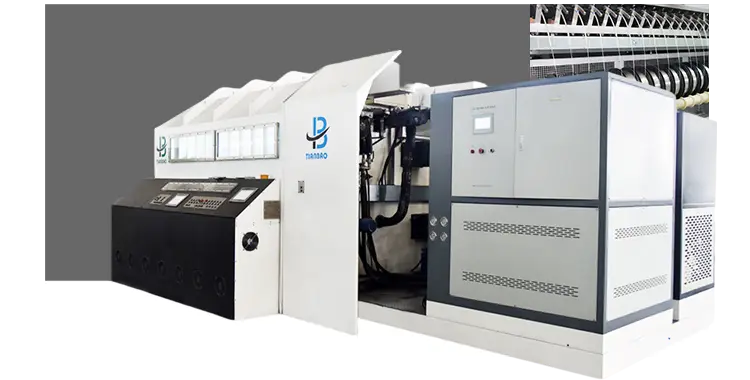
How to Compare Vacuum Metallizer Quotes: 9 Key Specs
When you request quotations from three manufacturers, the prices can differ by shocking margins. The cheapest offer rarely delivers the cheapest machine, and the most expensive one rarely delivers the best value. To compare vacuum metallizer quotes properly, you must look past the price line and examine the configuration behind it. In this guide, we walk you through nine specifications that decide real value, plus the hidden fees most buyers discover too late.
Why Price Alone Misleads You
Two quotations at a similar price can hide completely different machines. One supplier may quote a full pumping train with cryogenic traps and online OD control; another may shrink the pumps and strip the automation just to lower the number. When you compare vacuum metallizer quotes without comparing specifications, you gamble your production line on a single figure.
Low-price traps appear in predictable places:
- Smaller vacuum pumps. Cheaper pumps extend pump-down time, raise energy bills, and limit the ultimate vacuum your film quality needs.
- Fewer evaporation boats. A machine with fewer boats than its web width demands slower coating speeds and delivers less uniform layers.
- Basic control systems. Without recipe management and data logging, operators control quality by guesswork.
- No training or spare parts. The lowest quote often excludes operator training, commissioning support, and the starter spare parts kit.
In short, price comparison without specification comparison is a lottery. The nine specs below give you a fair scoring system.
The 9 Specs That Matter More Than Price
1. Pumping System Configuration
The vacuum system decides your cycle time and coating quality. Compare the pump combination (rotary vane pump, roots booster, diffusion pump), the presence of a cryogenic trap, and the rated ultimate vacuum. For reference, our TB-F suspension machines reach an ultimate vacuum of 5×10⁻¹ Pa, and our TB-G induction machines reach 4×10⁻¹ Pa. Faster pump-down means shorter cycles and more output per shift. Ask every supplier: What pumps come with the machine? What is the ultimate vacuum? How long does pump-down take from atmosphere? Later, professional leak detection services can verify the vacuum integrity of any machine you choose.
2. Evaporation Source and Boat Layout
The evaporation source determines pinhole rates, coating speed, and operating cost. Compare resistance boats versus induction-heated graphite crucibles, and check the boat count against your web width. Our TB-F machines use 16 to 37 boats for web widths from 1400 to 3300 mm, while the TB-G induction line uses 6 to 15 graphite crucibles. A top-clamp staggered boat arrangement speeds up replacement and extends boat life — our guide to speeding up evaporation boat replacement shows why this detail matters. Ask: How many boats does this machine use at my web width? How long does a full boat change take?
3. Coating Speed and Cycle Time
Winding speed looks impressive on paper, but throughput per shift tells the truth. Our TB-F machines run up to 900 m/min on film, the TB-G induction line runs 500 to 750 m/min, and the TB-Y aluminum paper machine runs 300 to 500 m/min. Full cycle time includes pump-down, coating, and venting, so ask for the complete cycle for your typical roll diameter rather than a headline speed. More importantly, check whether the machine supports the film or paper grades you actually run (6–150 μm film for TB-F, 38–150 g paper for TB-Y).
4. Online Optical Density Control
Online OD detection measures the aluminum layer in real time and keeps thickness uniform across the roll. Machines without this feature rely on operator judgment, which produces inconsistent rolls and more waste. Our article on optical density in metallized films explains why this parameter drives packaging quality. Ask: Does the machine include online OD detection? Can it log and export data per roll?
5. Tension and Web Handling
Constant tension winding prevents wrinkles, breaks, and uneven coating at high speed. Compare the servo system and the rewind mechanism: our TB-F machines use four Siemens AC servo motors for synchronized tension control and a swing frame for automatic rewind adjustment by roll diameter. Ask: How many servo axes control the web? Does the machine handle my full substrate thickness range?
6. Cooling System Design
Cooling quality affects brightness, adhesion, and energy consumption. Double coating drum cooling keeps the film cool without extreme refrigeration temperatures, which shortens compressor runtime and protects the equipment. Our energy-saving innovations article details how modern cooling design lowers operating costs. Ask: How many coating drums does the machine have? What is the cooling temperature range?
7. Control System and Software
A modern control system makes operation predictable and traceable. Compare the PLC brand, HMI size, recipe management, and data logging. Our machines feature a Siemens PLC with a 12-inch color HMI and one-touch factory parameter restoration, which simplifies troubleshooting and operator training. Ask: Which PLC and HMI does this machine use? Can I store multiple process recipes and recall them instantly?
8. Energy Consumption
Working power gives you a quick energy benchmark: our TB-F range consumes 180 to 440 kW, the TB-G range 170 to 325 kW, and the TB-Y range 150 to 230 kW. Higher power does not automatically mean higher cost if the machine pairs it with shorter cycle times and efficient cooling. Ask for an estimated energy cost per roll, and read our reducing energy consumption strategies to understand where savings come from.
9. After-Sales Support and Hidden Fees
The quotation price rarely equals the total investment. Compare what the supplier includes: operator training, remote assistance, on-site commissioning, warranty terms, and spare parts availability. Our service support program covers training, spare parts, metallization processing, and after-sales service. Hidden fees to ask about include freight and insurance, customs duties, installation engineering, commissioning travel, starter spare parts kits, and payment terms. Our vacuum metallizer cost breakdown shows how these factors shape the final price.
A Real-World Comparison: Three Machines, Three Roles
A quick look at our own lineup shows why quotes need line-by-line comparison:
Each machine targets a different product. When two suppliers quote “a vacuum metallizer” at the same price, one may quote a general-purpose film machine while the other quotes an induction line for yarn coating. That is exactly why you must compare vacuum metallizer quotes line by line, not by the bottom number. Our Tempo vacuum metallizer lineup guide helps you map machines to your production profile.
Hidden Fees to Ask About Before You Sign
- Freight and marine insurance
- Customs duties and import taxes in your country
- Installation and commissioning engineering
- Operator training sessions (in-house or at the factory)
- Starter spare parts kit (boats, seals, pump oil, aluminum wire)
- Extended warranty and remote support subscription
- Payment terms and banking fees (LC versus TT)
- Delivery timeline and penalty clauses
Ask for a full landed cost breakdown in writing before you negotiate. Our article on 5 questions to ask before ordering a custom vacuum coating machine gives you a ready-made negotiation checklist.
Questions to Ask Every Supplier
- Which pumps, PLC, and HMI does the quotation include?
- What is the ultimate vacuum and the pump-down time?
- How many evaporation boats or crucibles does the machine use?
- Does the machine include online OD detection and data logging?
- What is the full cycle time for my typical roll size?
- What does the price include: training, commissioning, spare parts, warranty?
- Can you provide references from buyers with similar products?
- What is the delivery time, and what happens if you miss it?
For a price reality check, browse used metallizer listings and compare the used market against new quotations. You will see exactly what configuration differences do to price.
The Bottom Line
When you compare vacuum metallizer quotes, score every offer on the nine specs above plus the full landed cost. The cheapest quotation often hides smaller pumps, fewer boats, weaker control, and missing services. The best quotation shows its configuration clearly and supports it with training and after-sales care. Check the specification sheet guide if you need help decoding any line, and remember that the machine’s ROI depends on output, energy, and uptime — not the purchase price alone.
At Tempo Machinery, we provide transparent, itemized quotations for our fully automatic vacuum metallizers, with real specifications, clear delivery terms, and full after-sales support. Send us your requirements and request a quote today — we will show you exactly what every dollar buys.
FAQ
Q1: Why is one vacuum metallizer quote so much cheaper than another?
A: Most price gaps come from configuration differences: pump size, boat count, control system, cooling design, and included services. When you compare vacuum metallizer quotes, always examine the spec sheet line by line instead of the bottom line.
Q2: What should a vacuum metallizer quote include?
A: A complete quotation lists the machine configuration (pumps, boats, control system, web width, speed), delivery terms, installation and training, warranty, spare parts kit, and payment conditions. If any of these items is missing, ask for it in writing.
Q3: How do I compare pumping systems between quotes?
A: Compare the pump combination (rotary vane, roots booster, diffusion pump), the cryogenic trap, the ultimate vacuum, and the pump-down time. Also ask how long the supplier guarantees vacuum performance under humid conditions.
Q4: How much does a vacuum metallizer cost in 2026?
A: Prices depend on web width, automation, evaporation source, and services. Our cost breakdown article explains every price driver, and a detailed quotation from our team gives you a precise number for your configuration.
Q5: Can I get an itemized quotation from Tempo Machinery?
A: Yes. Send us your film or paper types, web width, speed targets, and coating requirements, and we will provide a transparent itemized quotation with no hidden fees.