


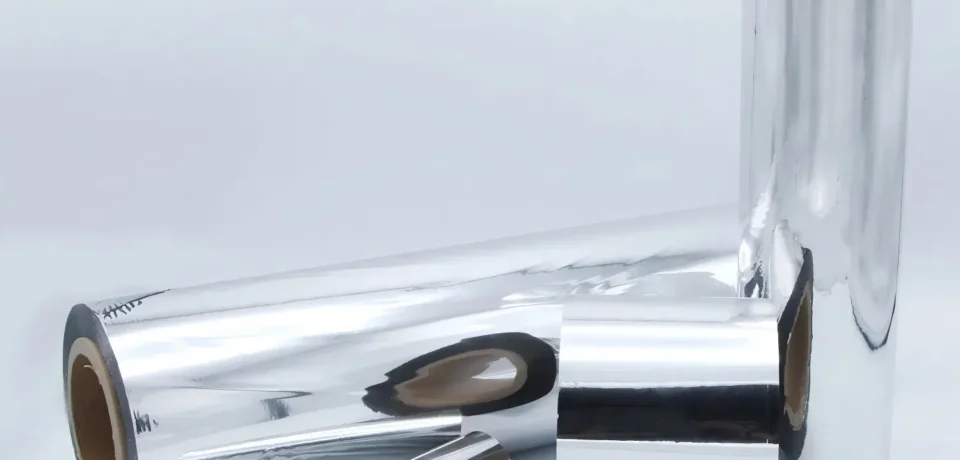
How Metallized Balloon Film Is Made: From Raw Film to Shiny Celebration Products
Walk into any party store, and metallic balloons dominate the display: silver stars, gold hearts, rainbow numbers. These shiny foil balloons do not get their luster from paint or ink. They start as plain, transparent polymer film and pass through a vacuum metallizer, where an ultra-thin aluminum layer transforms them into mirror-bright metallized balloon film.
This article walks through the entire production chain — from PET base film to the finished balloon you tie to a chair. You will learn which substrate works best, how the vacuum coating process works step by step, what coating specifications control shine and float time, and how to choose equipment for balloon film production. Whether you run a balloon factory or plan to start one, these details shape your product quality and your costs.
Related Reading: How a Vacuum Coating Machine Works: From Aluminum Evaporation to Finished Metallized Film
1. The Substrate: Why PET Leads Balloon Film Production
Every shiny balloon starts as a roll of clear film. Manufacturers most commonly use PET (polyester) film for balloon film production, and three properties explain why:
Gloss. PET accepts a vacuum-deposited aluminum layer with high reflectivity. The smooth polymer surface produces the mirror finish that consumers expect from premium foil balloons.
Strength. Balloons stretch when inflated with helium or air, and they endure handling, heat sealing, and shipping. PET offers the tensile strength to hold shape without tearing at the seal.
Heat resistance. The metallizing process exposes film to radiant heat from the evaporation source. PET tolerates higher temperatures than polyolefin films, which keeps the web stable during coating.
Many balloon films run 12 to 23 µm PET. Thinner film lowers material cost; thicker film adds stiffness and durability for large or shaped balloons. Moreover, some manufacturers laminate PET to nylon or PE later in the process — the metallized layer still provides the shine, while the lamination adds sealability and toughness.
2. Step by Step: How Vacuum Metallizing Turns Plain Film Into Metallized Balloon Film
The core transformation happens inside a vacuum chamber. A metallized balloon film production line follows six stages:
Step 1 — Loading and unwinding. Operators mount the PET roll on the unwind shaft and thread the web through the coating zone to the rewind shaft.
Step 2 — Pumping down. Vacuum pumps evacuate the chamber to a working pressure in the range of 10⁻⁴ to 10⁻³ mbar. At this pressure, aluminum vapor travels in straight lines without colliding with air molecules, so the coating deposits evenly.
Step 3 — Evaporation. The machine feeds aluminum wire onto resistively heated ceramic boats. The aluminum melts, vaporizes, and rises toward the moving web.
Step 4 — Deposition. The aluminum vapor condenses on the film surface as a solid metal layer, typically 300 to 500 Å thick. The layer forms in a fraction of a second, giving the film its metallic appearance.
Step 5 — Cooling. The freshly coated web passes over a chilled drum, which removes the heat absorbed during deposition. Proper cooling prevents wrinkles and keeps the roll flat.
Step 6 — Rewinding and inspection. The metallized roll rewinds under controlled tension. Operators spot-check optical density and gloss before sending the roll to lamination or printing.
For a fuller explanation of the physics behind these steps, read what vacuum metallizing is and how the equipment works.
3. Coating Specs That Decide Shine and Float Time
Two numbers matter more than any others in balloon film production: optical density (OD) and aluminum layer thickness.
OD controls shine. Optical density measures how much light the metal layer blocks. A film with OD 1.5 looks metallic; OD 2.0 to 2.2 looks mirror-bright. Most balloon film producers target OD 1.8 to 2.2 — bright enough for premium displays without wasting aluminum. Our optical density guide explains how to measure and specify this value.
Layer thickness controls helium retention. Although balloons seal at the edges, the film itself must block gas escape. Thicker aluminum reduces helium permeation through the PET, extending float time. Consequently, high-quality foil balloons float for days, while plain PET loses helium quickly.
Uniformity controls appearance. If the aluminum layer varies across the web, one side of the balloon looks dull and the other side bright. Automatic tension control and stable evaporation keep the cross-web variation tight — typically within ±5% — so every balloon in the batch matches. See how aluminum layer thickness affects barrier performance for the full picture.
4. After the Metallizer: Lamination, Printing, and Sealing
Metallizing alone does not produce a balloon. The metallized film moves through several conversion steps before it becomes a product:
Lamination. The metallized PET bonds to a sealant layer (often PE) or to nylon for extra strength. This step creates the heat-sealable structure that balloon makers need. In contrast, uncoated PET does not seal reliably.
Printing. Balloon factories print designs on either side of the film — sometimes on the metal surface with special inks, sometimes on the reverse side so the metallic sheen shows through. Gravure and flexo dominate this stage.
Heat sealing. Two layers of film seal together around a printed shape: circles, numbers, letters, or cartoon characters. The seal also embeds a self-sealing valve at the neck, so the balloon inflates easily and holds gas.
Slitting and packing. Finished balloons cut from the sheet, stack into packs, and ship to wholesalers and retailers.
At this stage, the quality of the metallized layer decides how well printing and sealing work. Pinholes weaken the barrier, and poor adhesion causes the metal to flake during heat sealing.
5. Quality Control: Pinholes, Adhesion, and Gloss Uniformity
Balloon film buyers reject rolls for three recurring defects:
Pinholes. Microscopic gaps in the aluminum layer let helium escape and create dull spots. Pinhole rates rise when vacuum pressure fluctuates, when the web carries dust, or when boats wear unevenly. Producers check pinhole density with light-box inspection or electronic pinhole testers. Our guide on reducing pinhole rates in thin-film coating covers the same principles that apply to balloon film.
Adhesion failure. If the metal layer peels or flakes during heat sealing, the balloon leaks at the fold. Adhesion depends on substrate surface energy, vacuum cleanliness, and coating conditions. A simple tape-pull test on every production roll catches this problem early.
Gloss variation. Roll-to-roll differences in OD create mismatched balloons within one order. Therefore, QC teams measure OD at multiple points across each roll and log the values per batch.
These checks protect both the balloon maker and the film supplier. A reliable metallized balloon film supplier documents OD, pinhole counts, and adhesion test results with every shipment.
6. Choosing a Metallizer for Balloon Film Production
Not every vacuum metallizer suits balloon film. Look for four capabilities when you evaluate equipment:
Consistent OD control. Balloon film demands repeatable OD across long runs. A fully automatic suspension vacuum coating machine regulates evaporation rate, web speed, and chamber vacuum automatically, holding OD within tight tolerances from the first meter to the last.
Fast, clean changeovers. Balloon factories switch between clear, white, and tinted films often. Machines with quick evaporation-boat replacement and easy chamber cleaning cut downtime between jobs.
Stable tension and winding. Thin PET wrinkles easily at high speed. Automatic tension control prevents creases that would ruin the final balloon shape.
Multi-purpose flexibility. A balloon film line can also coat food packaging film, labels, or decorative film. One machine that handles multiple metals and substrates spreads your investment across several product lines. Moreover, choosing between resistance boats and induction-heated crucibles affects pinhole rates and coating thickness limits — compare evaporation source options before you commit.
FAQ
Q1: What film do foil balloons use?
Most foil balloons use 12 to 23 µm PET film metallized with aluminum. Some structures add nylon or PE lamination for extra strength and sealability.
Q2: How long does a metallized balloon stay inflated?
A helium-filled foil balloon typically floats for 3 to 7 days, depending on OD, seal quality, and handling. Plain PET or latex balloons lose gas much faster.
Q3: Can I produce metallic balloons with one machine?
Yes. A single vacuum metallizer coats the film; lamination, printing, and heat sealing happen on separate conversion lines. Choose a metallizer with stable OD control and fast changeovers for efficient balloon film production.
Q4: Are metallized balloons safe?
Metallized balloons conduct electricity. Keep them away from power lines and substations, and never release them outdoors near electrical infrastructure. Industry associations such as NABAS and the European Balloon & Party Council publish handling guidance for professionals and consumers.
Q5: How do I test a balloon film sample before buying a machine?
Send your PET film to Tempo Machinery. We run a trial coating, measure OD and pinhole rate, and return a test report so you can verify the finish before investing. Contact us to arrange the trial.
Conclusion
Metallized balloon film production starts with plain PET and ends with the shiny, helium-tight balloons that fill celebration aisles worldwide. The journey passes through vacuum metallizing, lamination, printing, and heat sealing — and every stage depends on the quality of the aluminum layer.
If you plan to produce metallized balloon film or upgrade an existing line, talk to our team about your film width, OD target, and production volume. We will recommend the right configuration and run a trial coating on your substrate.
- WhatsApp: Andy +86 18705445289 | Kirsten +86 13280167547 | Doreen +86 17616731570
- Email: metallizertempo@gmail.com
- Website: https://www.vacuummetallizer.com/